id: 13370771
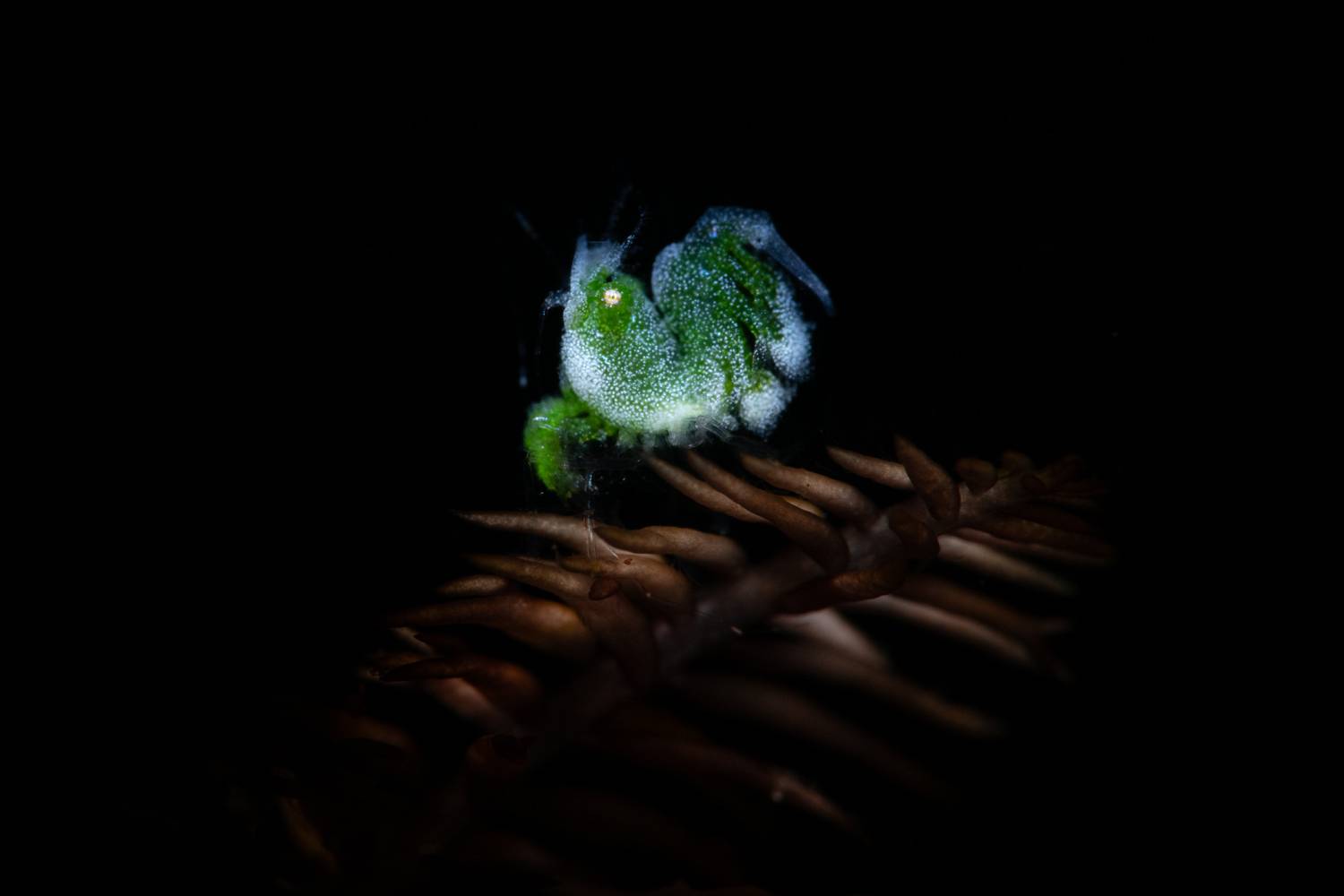
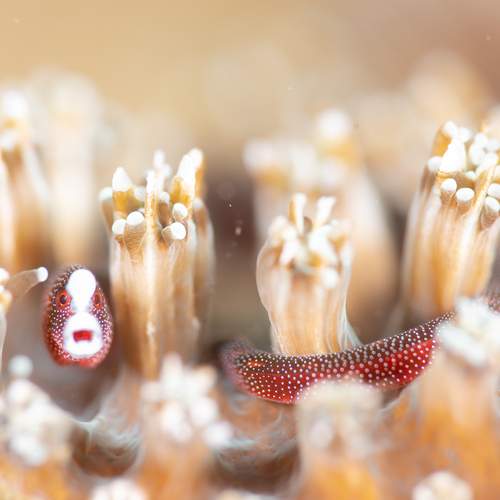
This image shows a Green Hairy Shrimp (Phycocaris simulans) photographed in the tropical waters of Indonesia’s Lembeh Strait. Using a precisely snooted strobe and high-magnification macro optics, I aimed to isolate the shrimp against the branches of a small coral colony. Unlike many encounters where this species closely matches the hue of the algae or hydroids it inhabits, the individual shown here displays a bright green coloration that stands in stark contrast to the warm reds of the coral. This mismatch highlights the natural variation within the species and demonstrates that its camouflage relies not only on color but also on body texture and behavior.
The photograph is meaningful because it captures a rarely documented scenario in which P. simulans is visible against its background rather than blending into it. The shrimp’s dense setae still mimic the fine textures of surrounding benthic growth, but the divergence in coloration reveals the limits and flexibility of its camouflage strategy. This gives insight into how microfauna navigate a dynamic habitat where perfect matching is not always possible.
The behavior observed here is typical of a relaxed individual: the shrimp remains stationary on a coral branch, subtly rocking with the surge while adjusting its posture to maintain a low profile. During the dive, I approached slowly and allowed the shrimp to acclimate to my presence before making careful, millimeter-scale adjustments to the snoot. The subject remained undisturbed throughout, shifting only slightly to orient itself among the coral polyps.
This image highlights both the vulnerability and resilience of one of Lembeh’s smallest and most iconic crustaceans, demonstrating how even imperfect camouflage can be effective when paired with stillness, texture mimicry, and the complex structure of the reef.
0 Likes
1 Favorites
335 Impressions
0 Comments