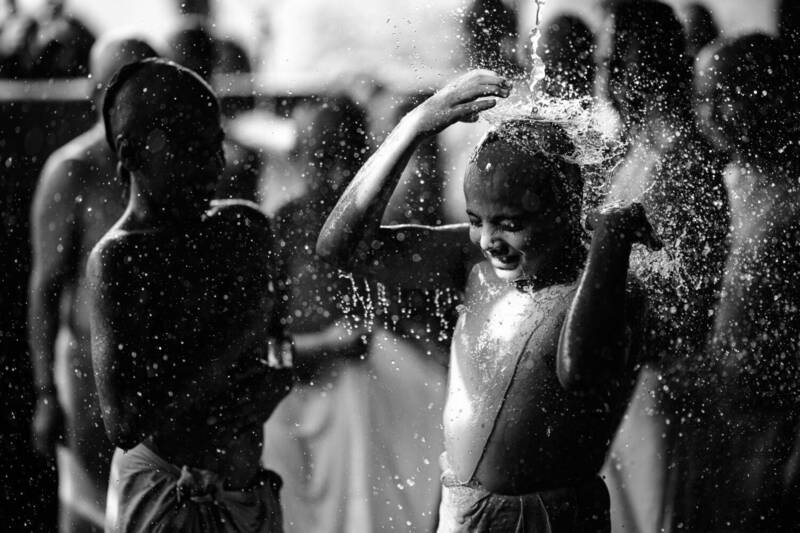
Nepalese kids from Bhagwat Sanyaas Aashram Gurukul take a holy bath before changing their sacred thread (Janai) during Janai Purnima at Pashupatinath Temple, Kathmandu. On this day, Brahmin and Chhetri men change their Janai, while others tie a Doro on their wrists for protection. In the Terai and India, the festival is celebrated as Raksha Bandhan, where sisters tie Rakhis on brothers’ wrists.
The soul of the village
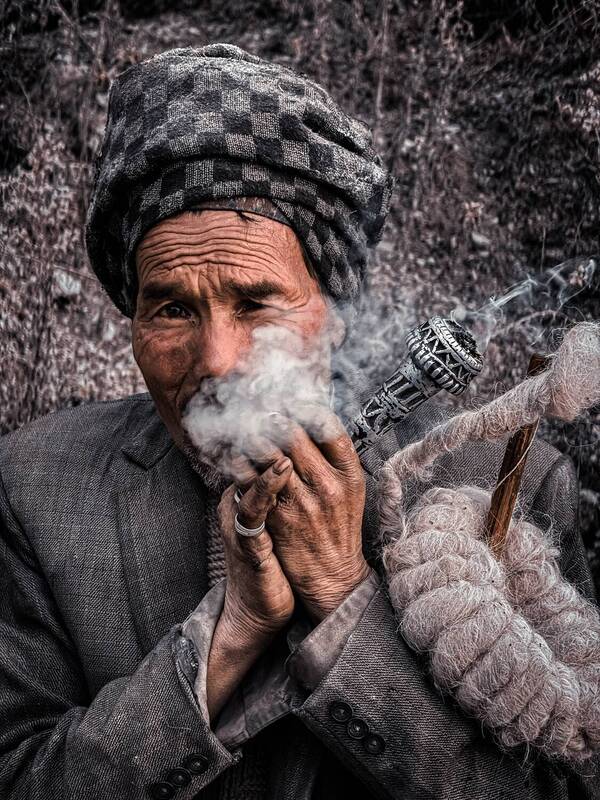
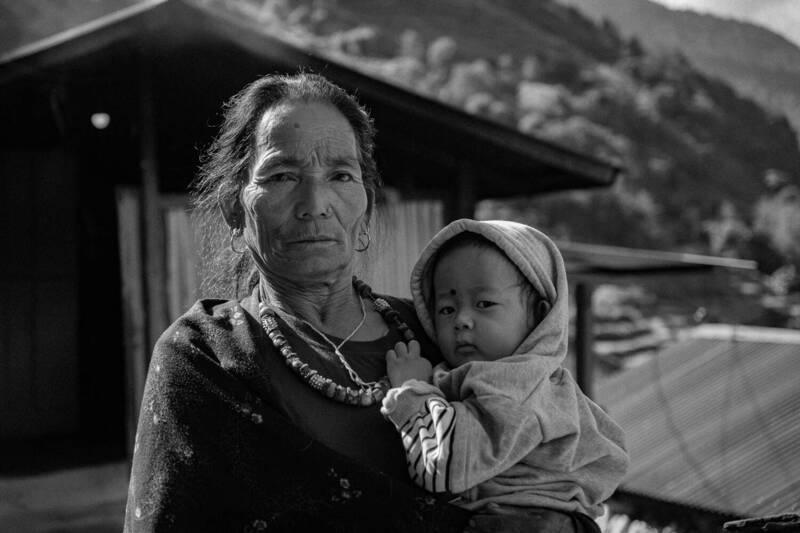
A weathered face tells a thousand stories as he enjoys his old-style silver tambako (tobacco) pipe, deep in the heart of the mountains.
In a quiet lane of Tanje village, Nepal, while I was exploring the village, I came in this narrow streets of village where I saw . An older local woman reaches out, passing a cigarette to another woman cradling a baby in her arms. Their conversation is unguarded, ordinary, and deeply human—an everyday ritual unfolding without performance.
What holds the frame together is the child. The baby’s eyes follow the cigarette with innocent curiosity, unaware of its meaning, yet silently witnessing an exchange shaped by age, habit, and survival. In that small gaze lies a quiet tension between past and future—between what is handed down consciously and what is absorbed unknowingly.
The village street becomes more than a backdrop; it is a living space where stories pass as naturally as breath. This photograph is not about judgment, but about observation—about the raw honesty of village life, where care, contradiction, and continuity coexist in a single moment.
Captured while wandering through Tanje, this image reflects how life in Nepal often reveals itself unexpectedly, in fleeting scenes that speak louder than posed portraits ever could.
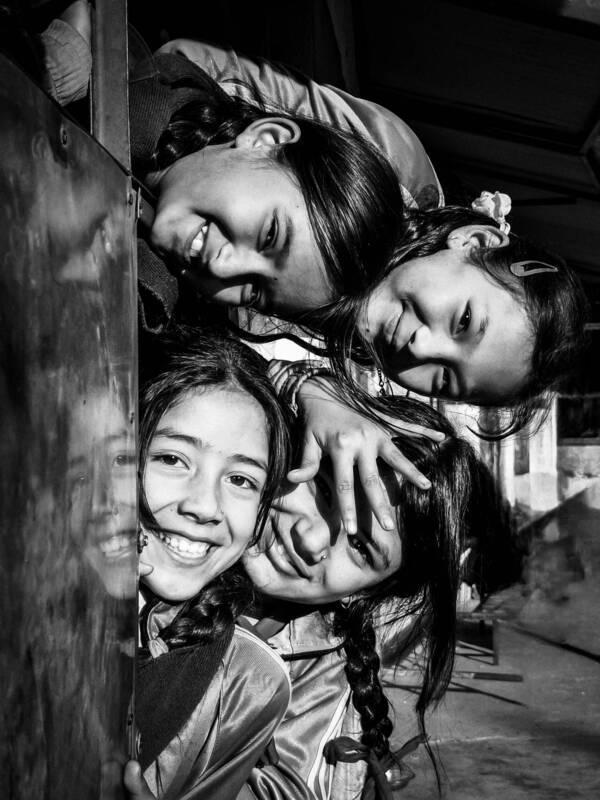
A moment of shared, unrestrained joy as four school friends crowd together to peek through a narrow frame, welcoming the bright light of the day. Their faces, stacked in spontaneous geometry, reflect the innocence and irresistible curiosity of childhood. This portrait aims to capture the simple, collective exuberance found in everyday school life.
– Рейтинг фотографов по странам и городам строится на основе 3-х лучших фотографий автора и их относительной позиции в каждой отдельной номинации. Рейтинг в номинации "Мобильная фотография" учитывается в меньшей степени для формирования рейтинга. В списке по странам и городам показывается одна фотография автора с лучшим рейтингом.
– В списке опубликованы только работы которые прошли 2-й этап голосования.
– В рейтинге лучших фотографий учитывается только одна — самая сильная — работа от каждого автора. Даже если у фотографа опубликовано несколько работ, в расчёте позиции используется только одна, с наивысшим рейтингом. Поэтому порядок фотографий в списке может не совпадать с итоговым положением автора в рейтинге.
– The rating of photographers by countries and cities is based on the three best photos of the author and their relative position in each separate nomination. Rating in the nomination "Mobile Photography" is taken into account to a lesser extent for rating formation. The list by country and city shows one photo of the author with the best rating.
– Only those photos have been published in the list that passed the second stage of voting.
– Only one strongest photo from each author is counted in the Best Photos ranking. Even if a photographer has several published works, only the highest-rated one is used to calculate their ranking position. As a result, the order of photos in the list may not match the author's final ranking position.