id: 2301584
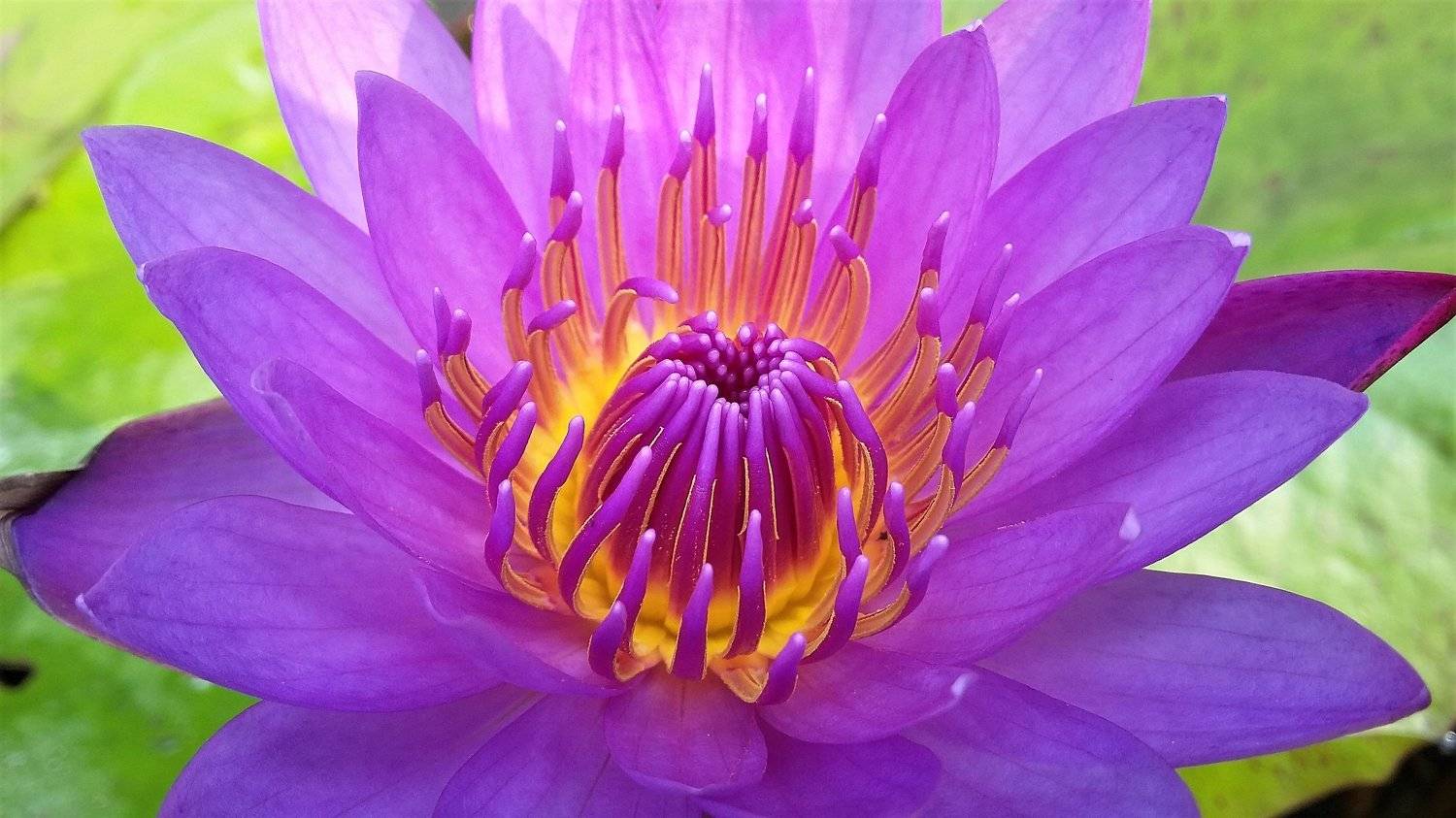
Nymphaea caerulea, known primarily as blue lotus (or blue Egyptian lotus), but also blue water lily (or blue Egyptian water lily), and sacred blue lily, is a water lily in the genus Nymphaea. Like other species in the genus, the plant contains the psychoactive alkaloid aporphine (not to be confused with apomorphine). It was known to the Ancient Egyptian civilizations.
Its original habitat may have been along the Nile and other parts of East Africa. It spread more widely in ancient times, including to the Indian subcontinent and Thailand.
The leaves are broadly rounded, 25–40 cm (10–16 in) across, with a notch at the leaf stem. The flowers are 10–15 cm (4–6 in) in diameter.
Reports in the literature by persons unfamiliar with its actual growth and blooming cycle have suggested that the flowers open in the morning, rising to the surface of the water, then close and sink at dusk.[citation needed] In fact, the flower buds rise to the surface over a period of two to three days, and when ready, open around 9:30 am and close about 3:00 pm. The flowers and buds do not rise above the water in the morning, nor do they submerge at night. The flowers have pale bluish-white to sky-blue or mauve petals, smoothly changing to a pale yellow in the centre of the flower.
https://en.wikipedia.org/wiki/Nymphaea_caerulea
0 Likes
9 Favorites
359 Impressions
0 Comments