id: 13078150
January 2026.
Deep inside a dry deciduous forest, the western sun was already turning amber. The cold air carried a rare stillness — the kind that only appears in winter when life slows and every sound becomes louder.
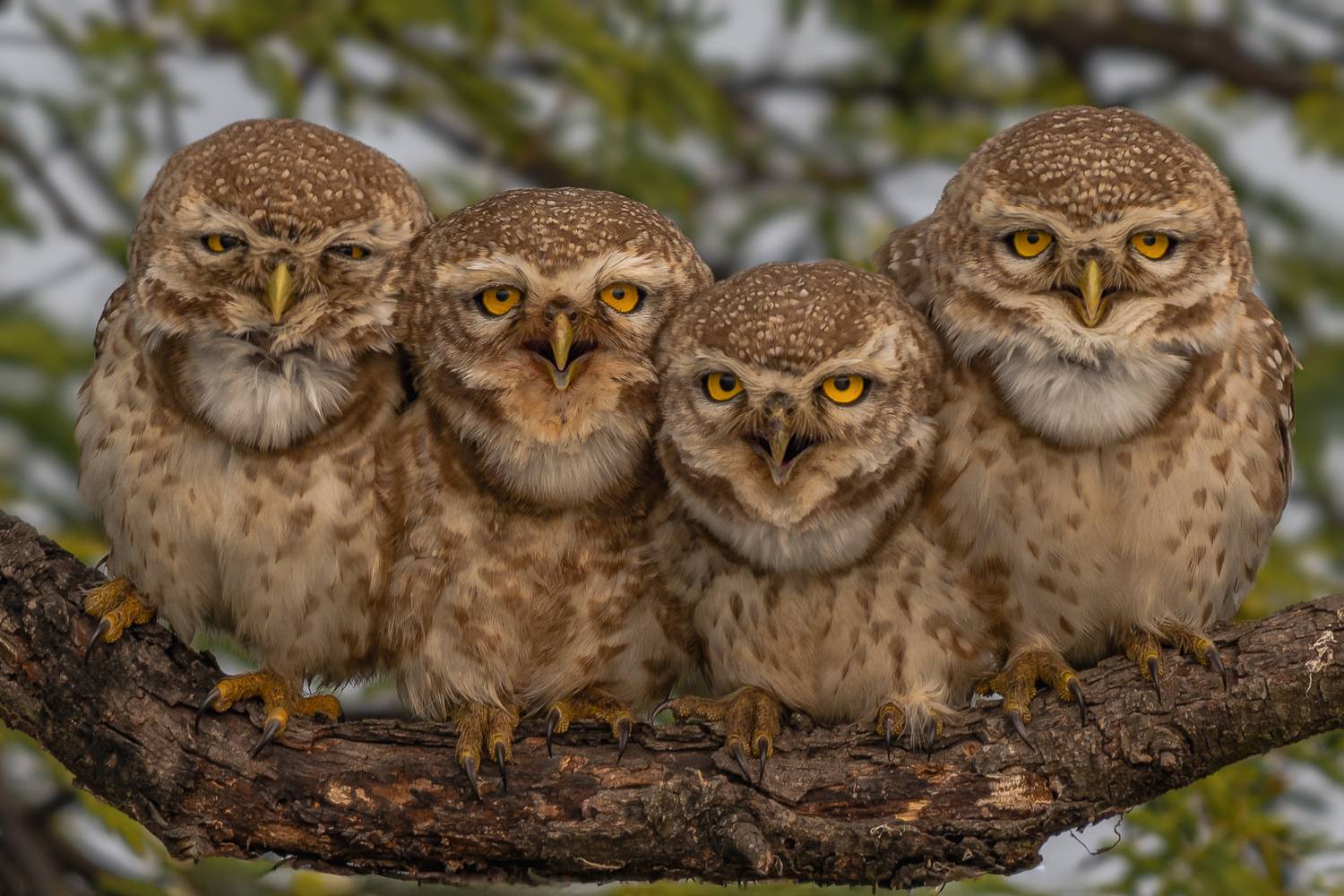
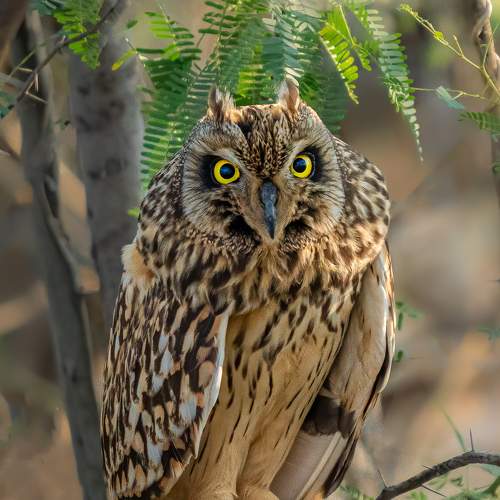
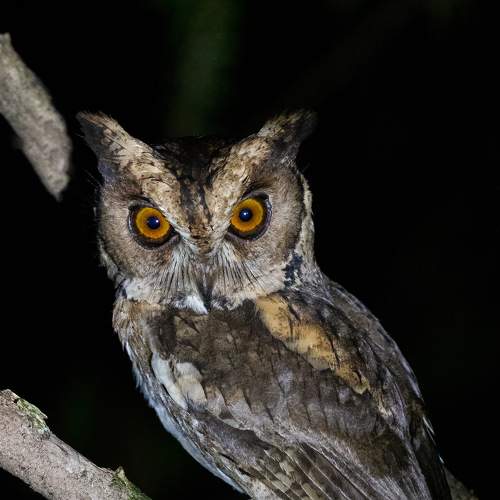
On a rough, weathered branch sat four Spotted Owls, pressed shoulder to shoulder. They were not resting. They were warming themselves in the final rays of the day, soaking in the heat after a long, cold night of hunting. Their feathers were fluffed, eyes half-open — calm, yet alert. In the wild, even peace is temporary.
Suddenly, everything changed.
A Jungle Cat emerged silently from the undergrowth in front of them. Almost at the same moment, a Darter called from behind me, its sharp voice cutting through the stillness.
And in that instant — the forest froze.
Four owls stiffened.
Eight golden eyes locked forward.
No wings moved.
No bird called.
This was not fear — it was awareness.
Owls are masters of energy conservation. In winter, every movement costs precious heat and strength. Yet when a predator appears, their entire body shifts into survival mode — eyes wide, posture upright, senses tuned like instruments. They were not hunting. They were being hunted.
The Jungle Cat paused, sensing it was being watched.
The owls did not blink.
For a few seconds, predator and prey shared the same breath.
Then, as quietly as it had appeared, the cat melted back into the forest. The darter fell silent. And slowly, the owls relaxed — still together, still alive.
This photograph captures more than four birds on a branch.
It captures the invisible tension that rules the wild — the constant balance between calm and danger, between life and loss.
In those eight eyes lives a truth of nature:
In the wild, even silence is a form of survival.
5 Likes
15 Favorites
1442 Impressions
0 Comments