id: 10767403
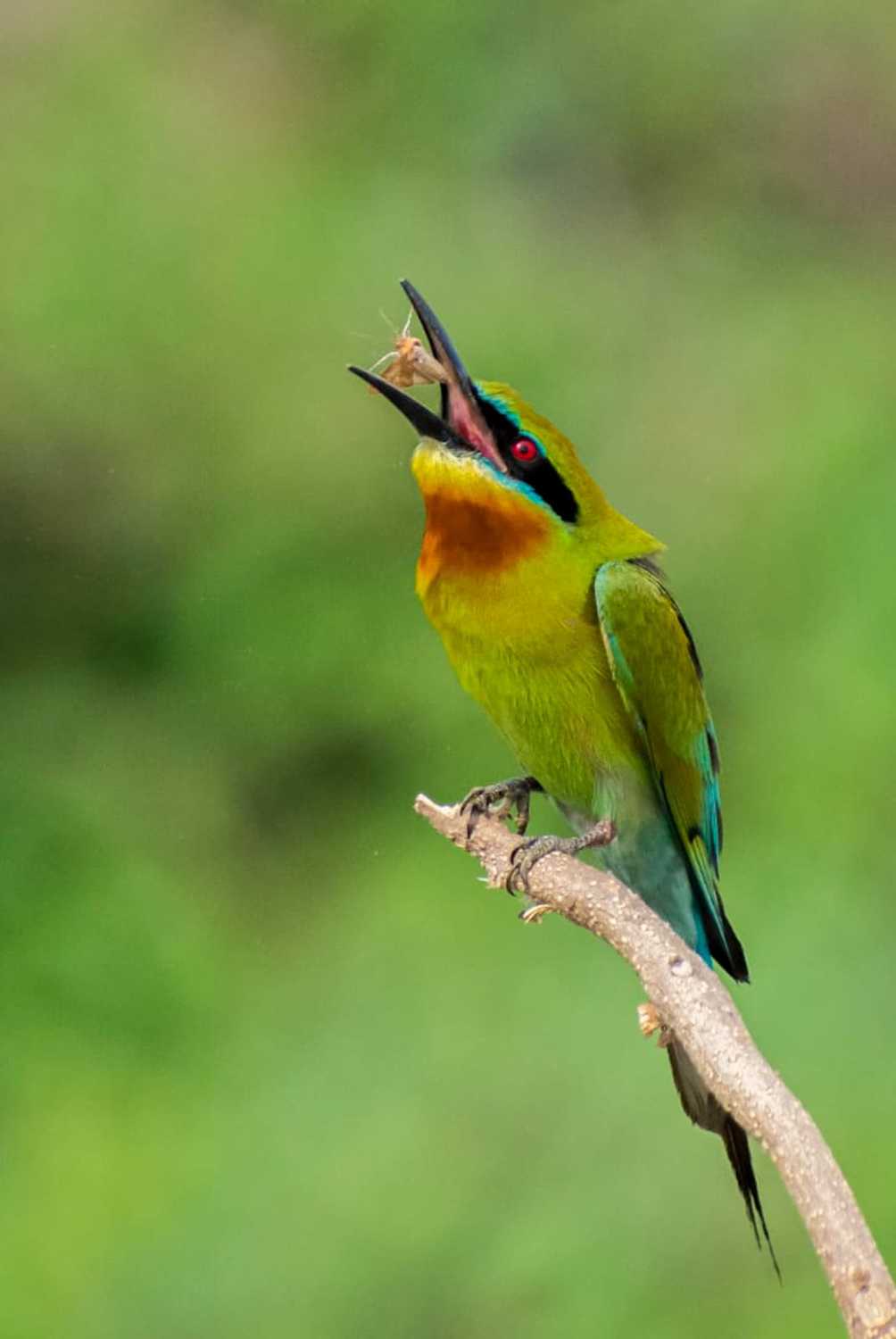
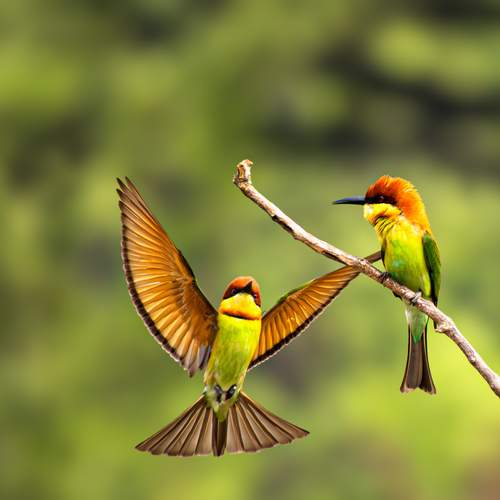
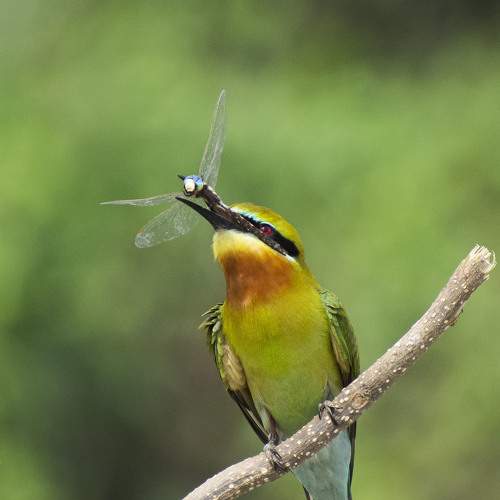
This species, like other bee-eaters, is a richly coloured, slender bird. It is predominantly green; its face has a narrow blue patch with a black eye stripe, and a yellow and brown throat; the tail is blue and the beak is black. The three outer toes are united around their bases. It can reach a length of 23–26 cm, including the two elongated central tail feathers which can be just two inches more than the remaining ten feathers.[2] Sexes are alike. This species is usually found near water and like other bee-eaters it predominantly eats flying insects, especially bees (as large as the Xylocopa sp.[3]), wasps and hornets, which are caught in the air by sorties from an open perch. They may also forage in flight over estuaries, backwaters and even over the sea but not far from the coast.[4] This species probably takes bees and dragonflies in roughly equal numbers. The insects that are caught are beaten on the perch to kill and break the exoskeleton. This habit is seen in many other members of the order Coraciiformes.[5] They call mainly in flight with a rolling chirping whistling teerp.[2]
0 Likes
3 Favorites
1233 Impressions
0 Comments