id: 14313082
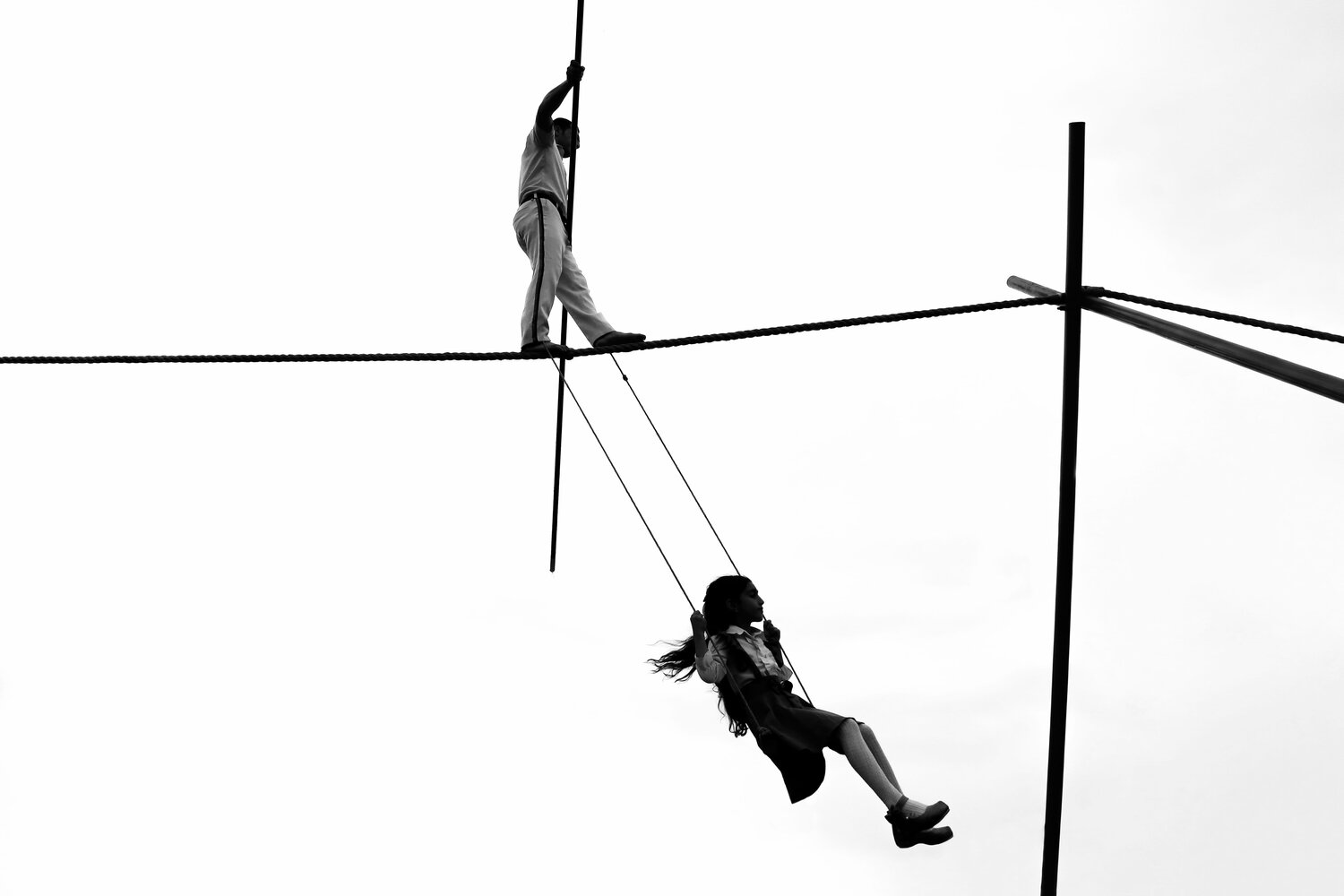
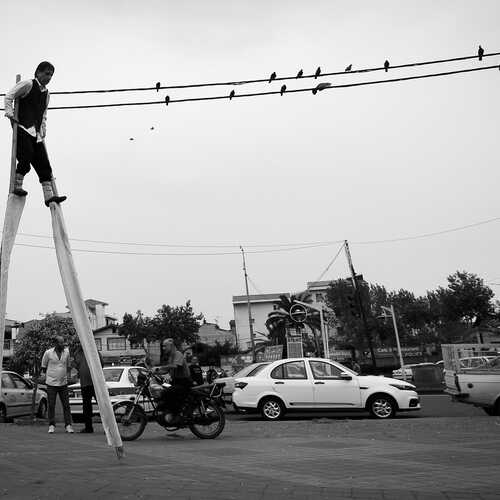
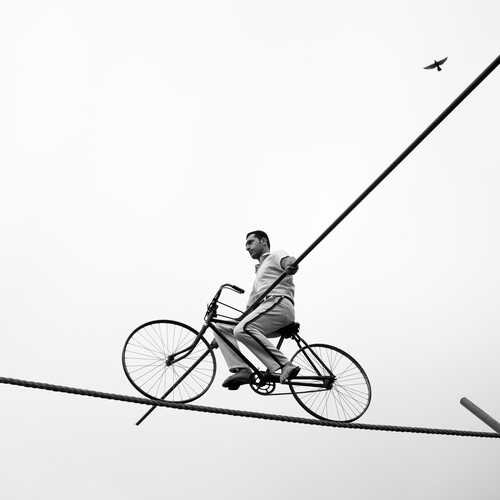
\"Lafand-bazi\" (tightrope walking/rope-walking) is a captivating form of traditional folk performance that enjoys special popularity among the people of Gilan. Its historical roots stretch far back into the past; the region\'s geographical features and the nature of its social life have played a significant role in the emergence of this practice. It is also known by various other names, such as *tanab-bazi*, *risman-bazi*, and *rasan-bazi*—all terms referring to rope-walking.
The performer—referred to as a *pahlevan* (champion/acrobat)—begins by offering prayers and praises to God, as well as reciting the virtues of the \"Master of the Pious\" (Imam Ali). He then ascends the supporting structure and traverses a tightrope, holding a long pole to maintain his balance. As he moves across the rope, he executes a variety of acrobatic feats to entertain the crowd. Meanwhile, a character known as the *shaytanak* (little devil/trickster) engages the audience with humorous antics, while musicians playing the *sorna* (a traditional wind instrument) and *naghareh* (a type of drum) perform lively, spirited folk music.
*Lafand-bazi* is highly popular in the lowland villages of Gilan and is frequently performed during Nowruz (the Persian New Year), various other holidays, and wedding celebrations throughout the province.
A *Lafand-bazi* troupe consists of the following members:
— The *pahlevan* (rope-walker), who performs the feats on the tightrope. The greater his mastery over the rope and the more diverse his repertoire of stunts, the more popular he becomes.
— The *yalanchi*, who serves as the *pahlevan*\'s assistant; he is also known as the *shaytanak* or *shaytan* (the trickster/devil figure).
— The *sornachi*, or player of the *sorna*.
— The *nagharchi*, or player of the *naghareh* (drum).
In addition to these, other individuals serve as support staff, handling various logistical and service-related tasks for the troupe. *Lafand-bazi* (tightrope walking) is performed during the summer (from early July to late August), in the autumn (October and November), during the Nowruz and Sizdah Bedar holidays, at various festivals and celebrations, and occasionally at weddings.
In short, *Lafand-bazi* stands as one of the most beautiful and ancient traditional folk pastimes in Gilan. The late Parviz, along with his children, played a significant role in introducing this art form to the public; they would appear at various events to showcase this traditional local sport.
Send feedback
0 Лайки
0 В избранном
691 Показы
0 Комментарии