id: 4356801
Latest News
Angelina Jolie appreciates Bangladesh’s leadership role in Rohingya crisis | 18 injured as private car ploughs through crowd in Kurmitola | 8 injured in IU BCL factional clash | Appellate Division upholds bail of Sigma Huda, two daughters | FM hopeful of reopening labour market in Malaysia soon | PM, Sheikh Rehana visit exhibition on Bangabandhu |
METRO
17 September, 2016 00:00 00 AM
Submit Print
Horse-drawn carriages in Dhaka limping to survive
ABHIJEET DAS
Horse-drawn carriages in Dhaka limping to survive
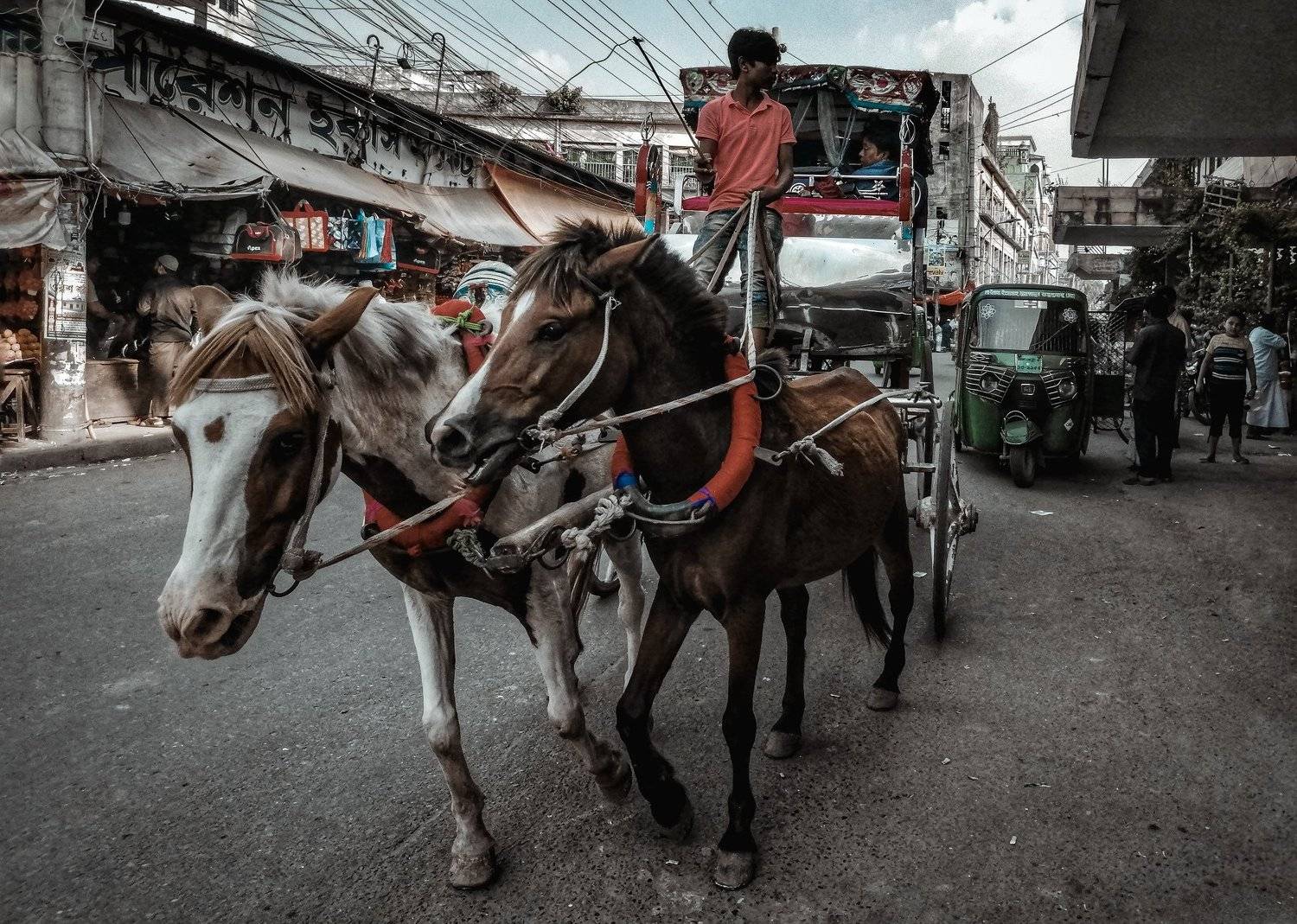
Owners of centuries-old horse-drawn carriages, once the major mode of transport of the elite in Dhaka, are now struggling to survive due to competition with cycle-rickshaws and three-wheelers.
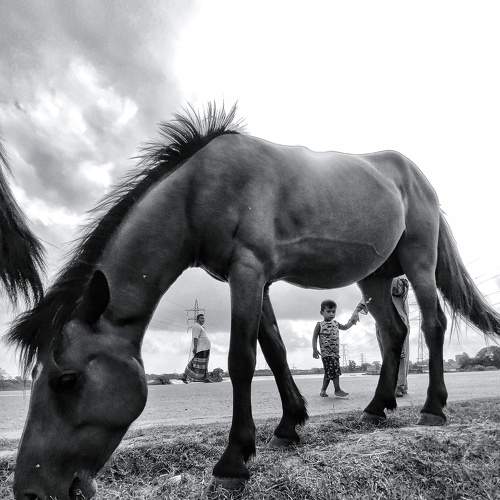
Horse cart owners say the carriages are declining as the profession is becoming less lucrative with each passing day and also due to increasing expenses to maintain the horses.
Only around 30 horse-drawn carriages, owned by 17 or 18, are currently running on the streets of Sadarghat, Fulbaria, Gulistan, Golapasaha Mazar, Bangabajar, Bakshibazar and Keraniganj of Old Dhaka.
“There were hundreds of horse-drawn carriages before 1971, when Bangladesh gained independence,” Mohammad Nizamuddin, a horse carriage owner, told The Independent. He has been in the profession for generations.
Along with other expenses for maintenance of horses, prices of horse feed are also increasing. For this, businessmen are losing interest in the business and seeking aid from the government to improve the situation.
Cart owners say they cannot generate enough money as carriage taxis in congested streets. However, top breeds—such as Marwari or Multani horses—can still bring in the cash when they are rented out to the film industry.
The carts are decorated with flowers for special occasions. They are still an important part of the Bengali New Year celebrations, and even in wedding and turmeric ceremonies in Old Dhaka. Apart from this, these carts were rented for film shooting purposes.
Cart owner Mohammad Ali said: “On social occasions, we earn Tk. 3,000 to Tk. 30,000. We also run our vehicle as reserved service. Such service one or three days a week brings much money for us. Carrying regular passengers is no longer lucrative.”
Many people inherited these carts and used to earn their living by renting them.
Horse carriage owners fear that their next generation might not be interested in this traditional mode of transport, as the cost for maintaining the horses is soaring. The new generation can also be lured by other high-paid professions.
Coachman Rafique said: “Cost for maintaining horses has increased several times. It takes Tk. 500-700 to feed a couple of horses.
So, profit is now much lower compared to what it was a decade ago. It is becoming increasingly difficult to continue with this job, as more than half of the income gets spent on the horse.”
These carriages are usually crammed with as many as eight persons in every trip. The fare for a trip from Sadarghat to Gulistan is Tk. 20.
0 Лайки
0 В избранном
465 Показы
0 Комментарии