Flood of same photos: is 35AWARDS turning into an incubator?
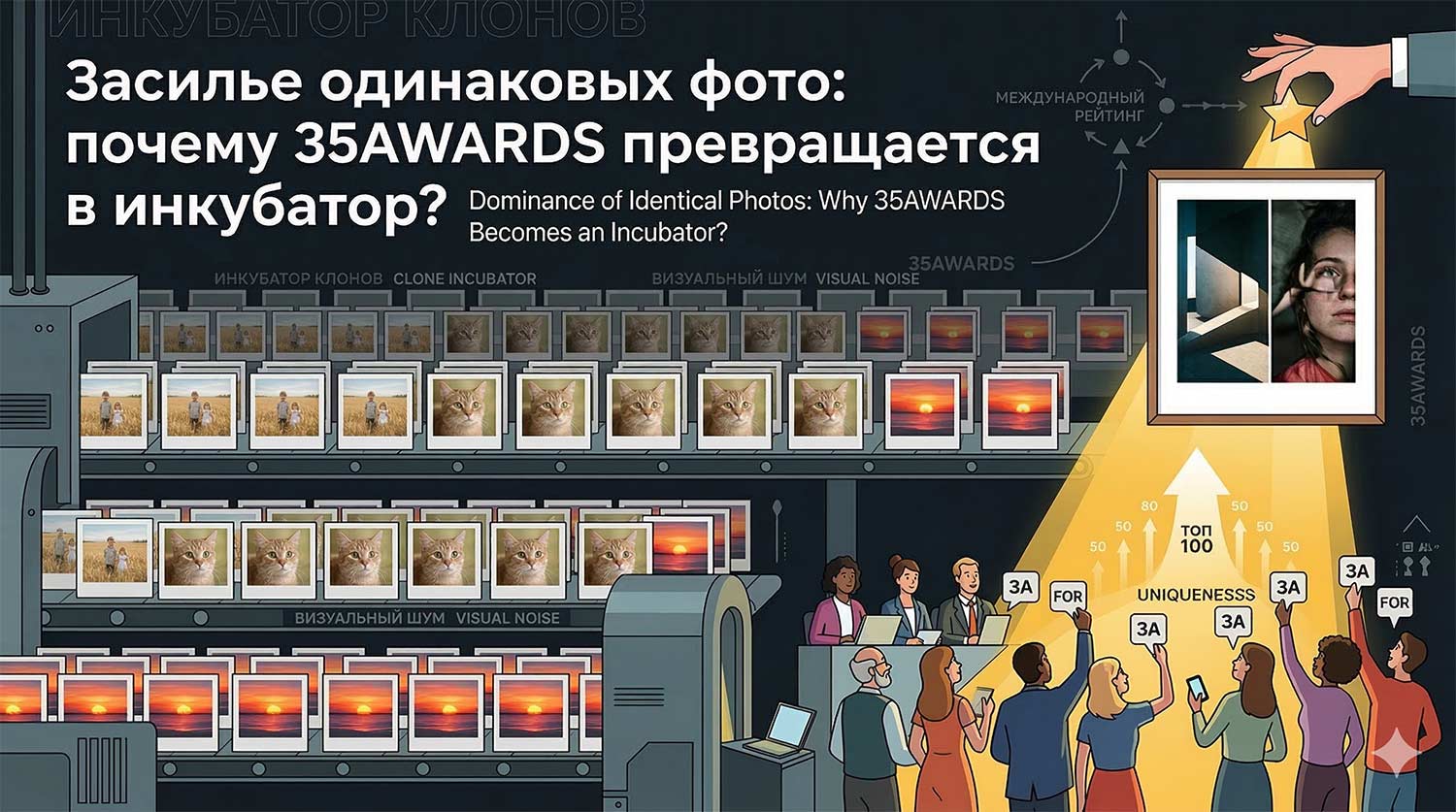
Photographer Review: claim about repetitive plots
Editorial Response
The “sameness” problem is not a technical failure, but a direct reflection of the current state of photography. Let us break down how the contest uses this repetition to surface real masters.
For a practical comparison of ideas and locations, use this tool page: clusters of similar photographs.
1. Contest as a trend mirror: 35AWARDS is a slice of what people shoot worldwide. If a nomination has many similar plots, it means the genre is at a mass-trend peak. We cannot prohibit authors from shooting what they like, but the system strictly blocks duplicate uploads of the same frame.
2. Pairwise comparison as an anti-banality filter: This mechanism is one of the best tools against clichés. When viewers see two photos, they intuitively choose the one that stands out. If audience is tired of templates, secondary works lose points, while a fresh visual approach quickly breaks away.
3. A chance for uniqueness: A large amount of similar work is actually good news for a strong photographer. Against thousands of standard frames, one original deep image becomes far more visible. Competitors’ banality highlights your uniqueness and helps gain rating faster.
4. Plot aging: A plot that was top last year may no longer excite this season because viewers “have already seen it.” This is natural: to stay at the top, an author must evolve faster than trends get replicated.
5. Value of stages and final ranking: Stages are a funnel for the main goal: selecting 100 best works and photographers of the year. Strong first-stage performance, even without further progression, is counted in the final international ranking and reflected in certificate as objective recognition.
6. Professional filter: On stages two and three, professionals and international jury join the selection. Experts intentionally look for works beyond templates, which helps truly unique images reach the final.
Conclusion: Participation in 35AWARDS is a test of visual independence. A huge volume of “same” photos is not a swamp, but a necessary background. Only against thousands of typical frames can one see whether you have a recognizable personal visual voice or just repeat others’ ideas. The contest gives an honest answer: are you part of the incubator, or the author whose vision makes people stop.