Fly Eye Macro Photography
25 worksFirst upload: May 2018Peak: 2025Last 12 months: 4
📝 Description
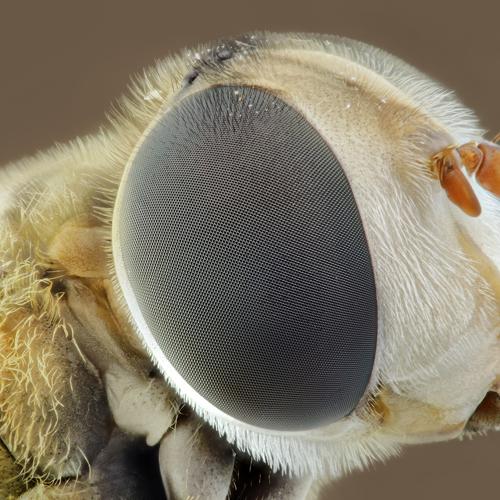
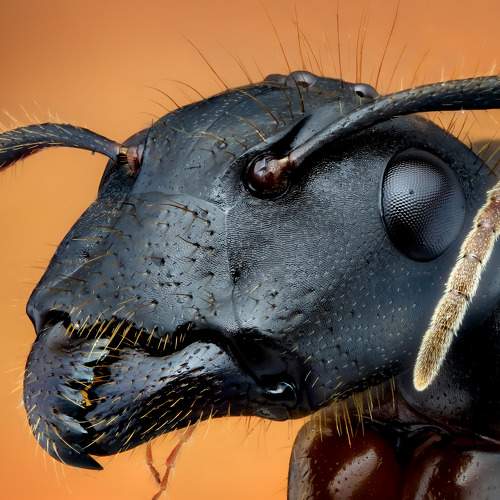
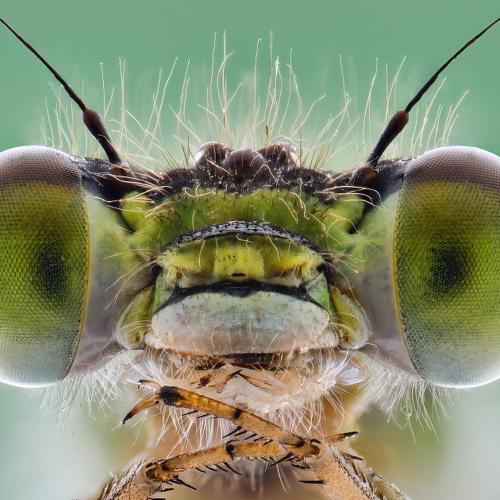
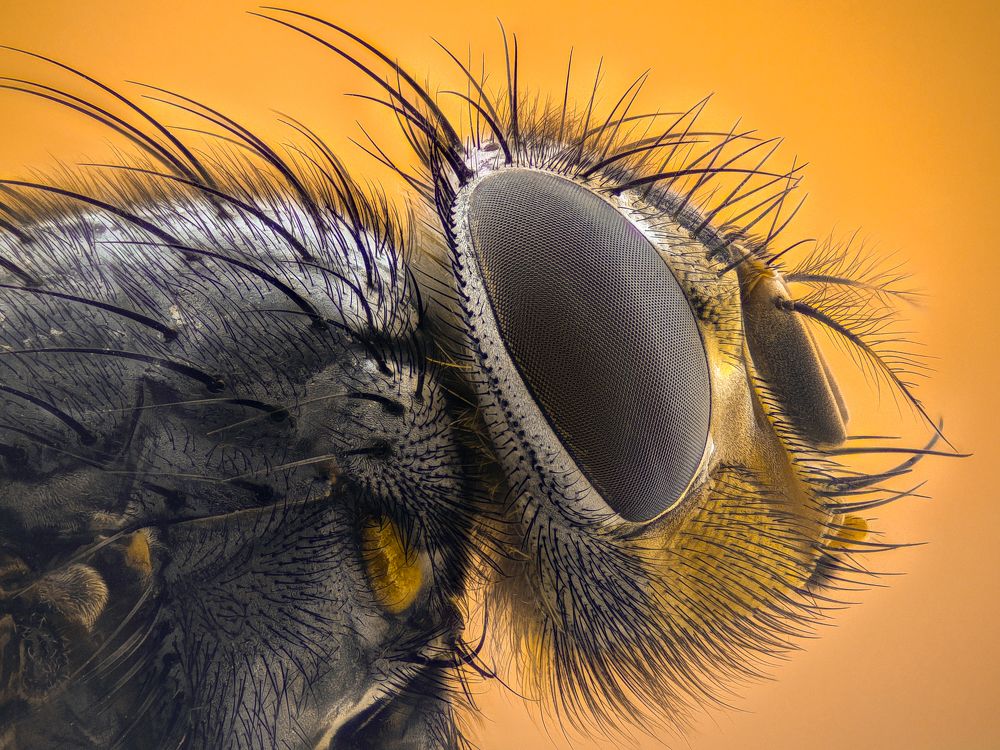
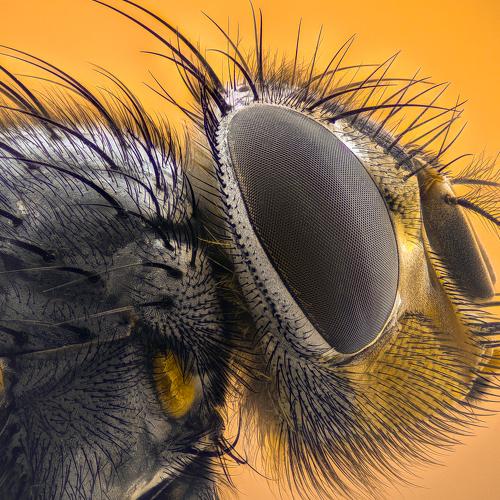
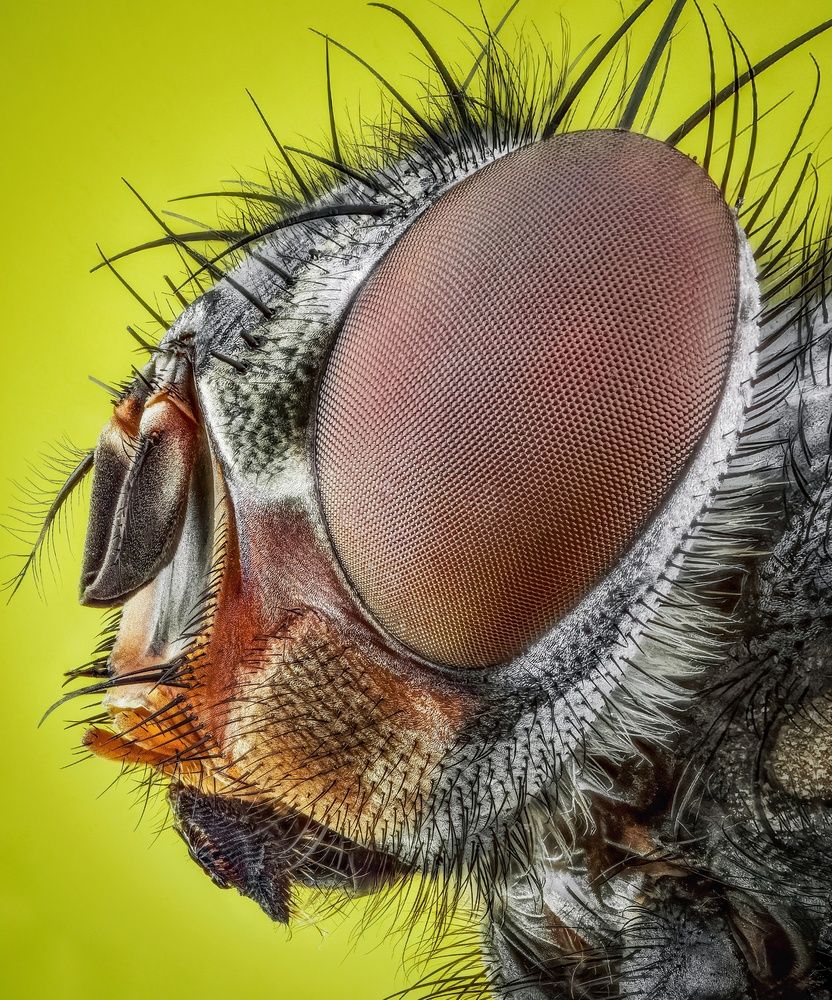
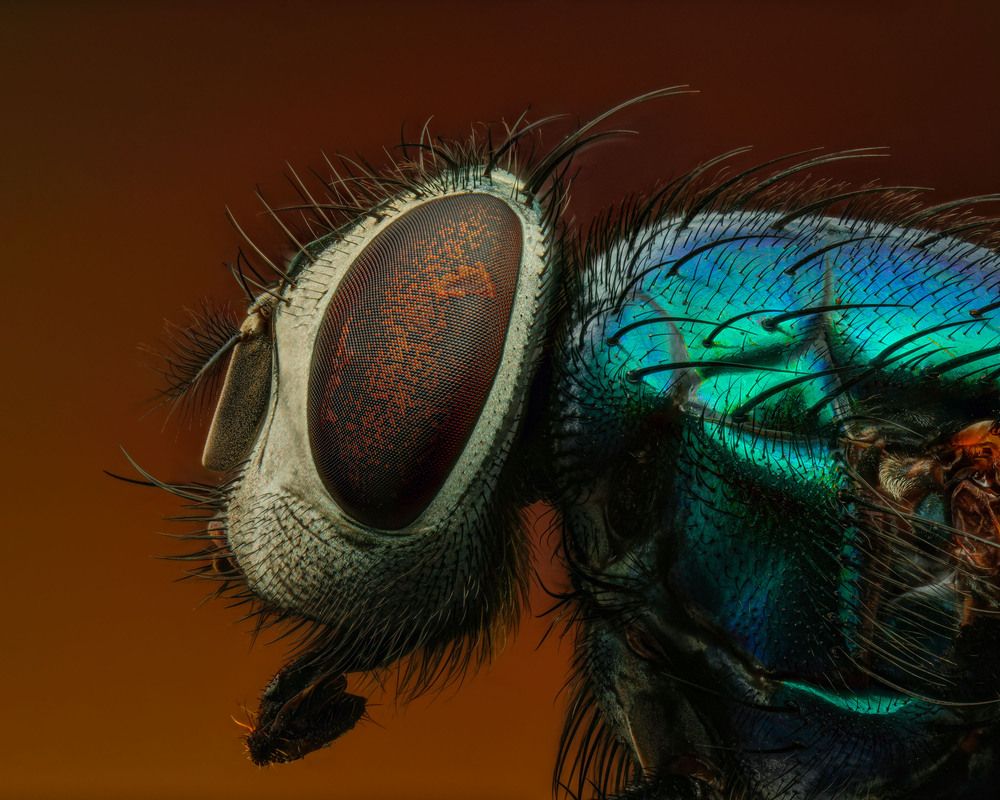
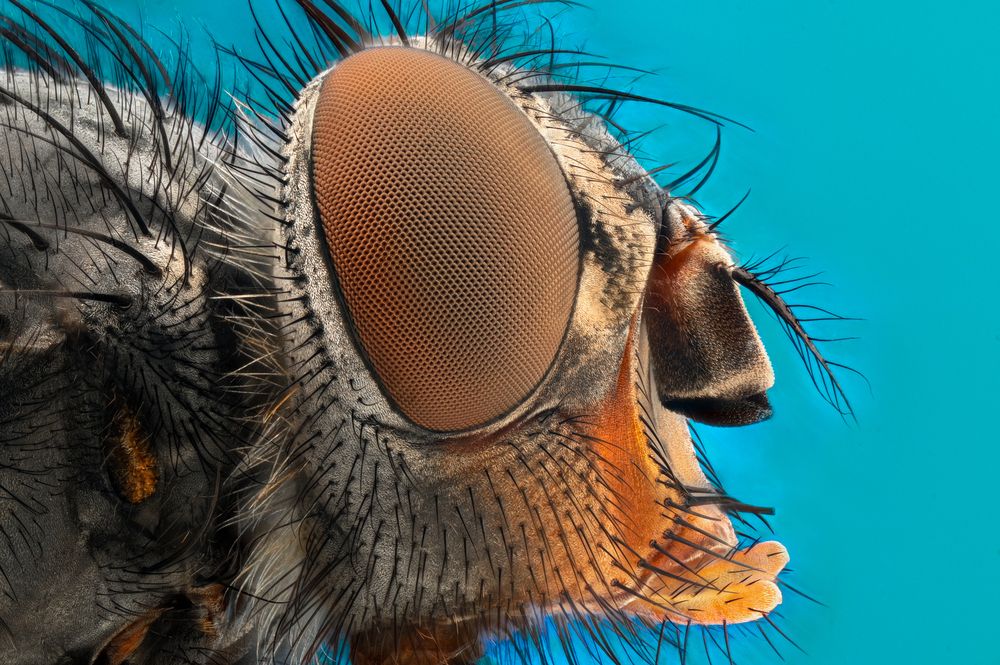
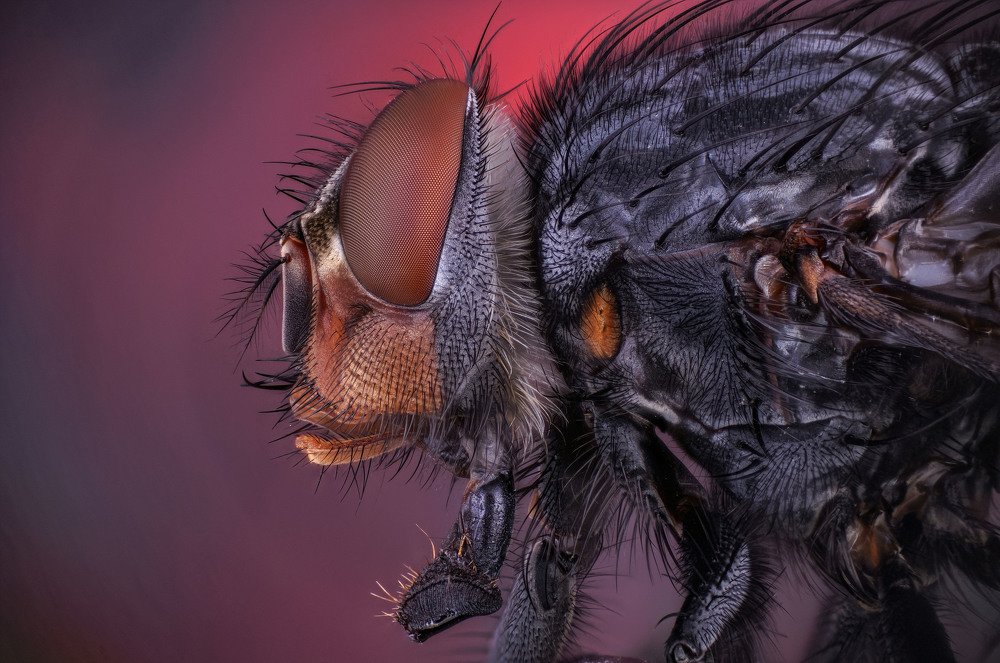
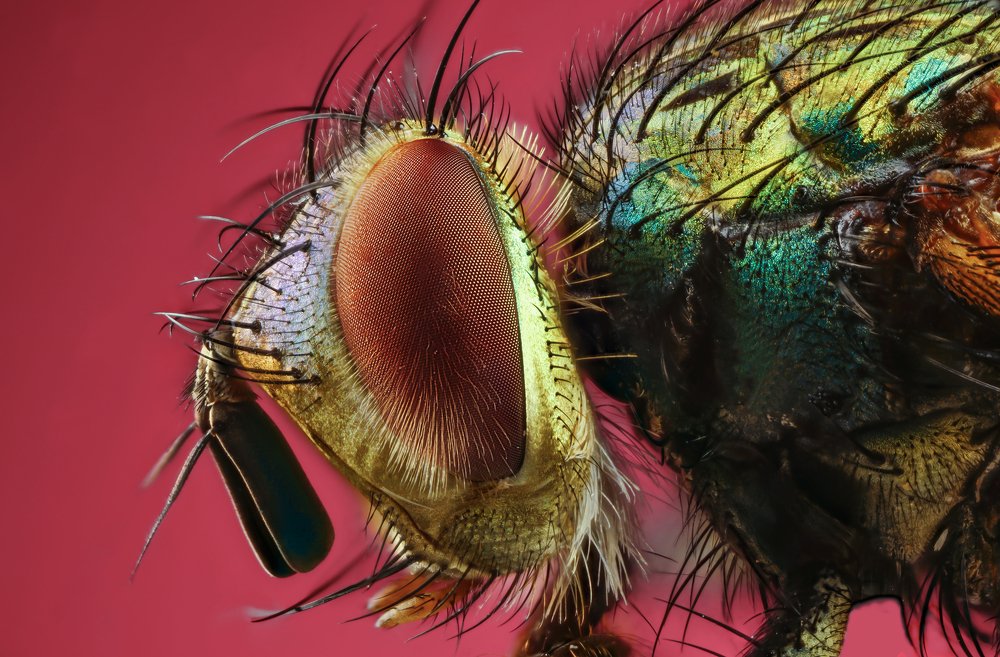
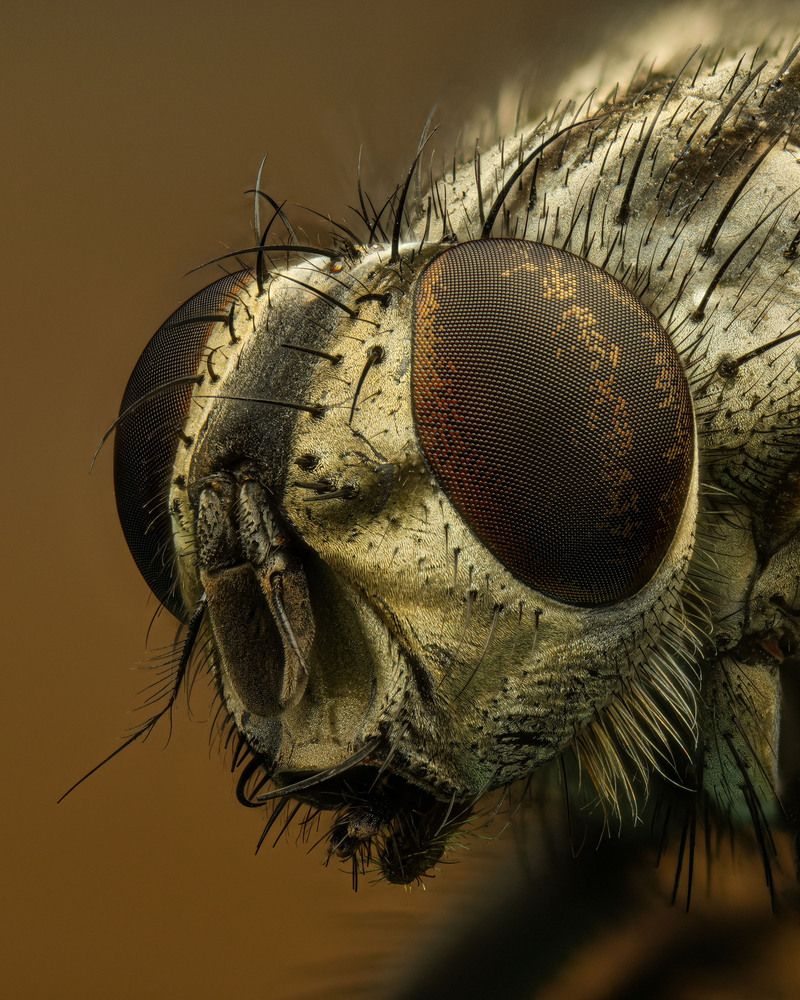
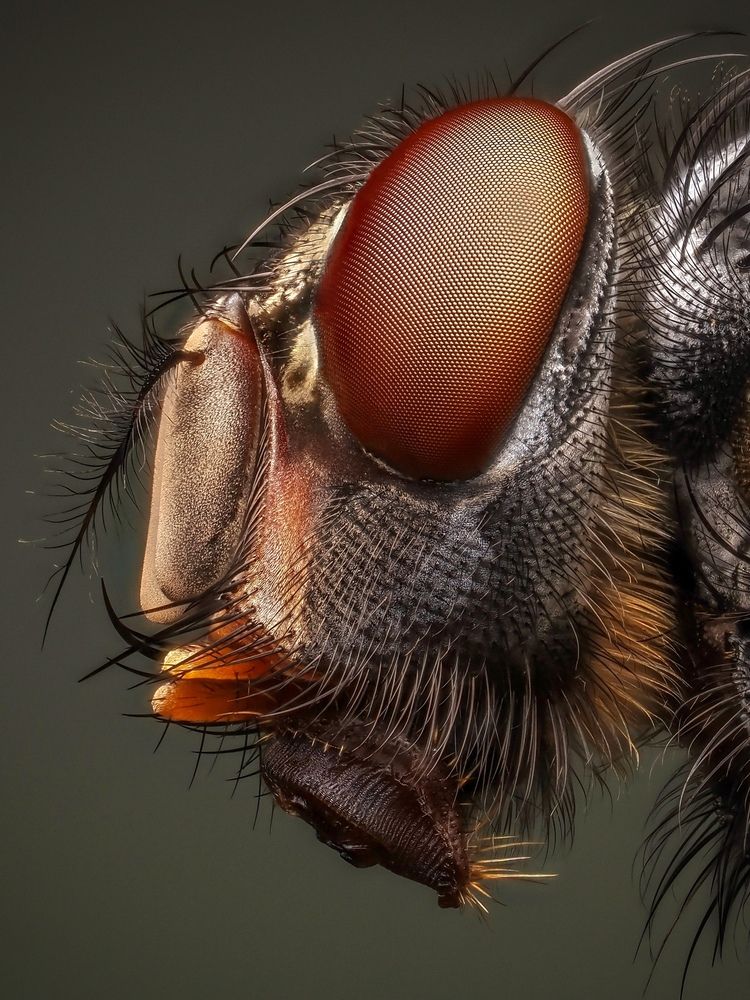
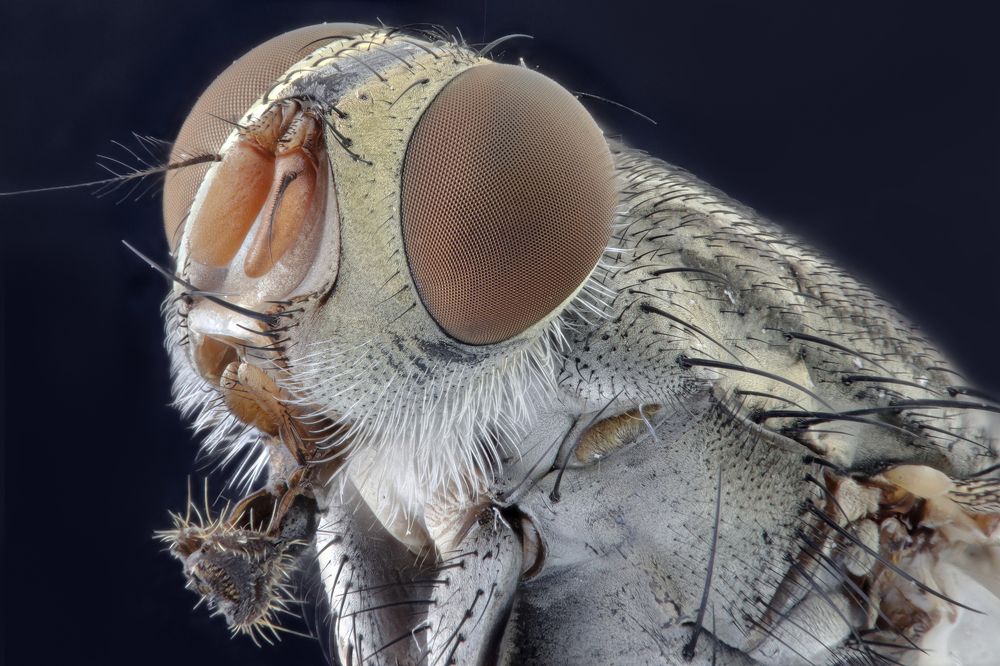
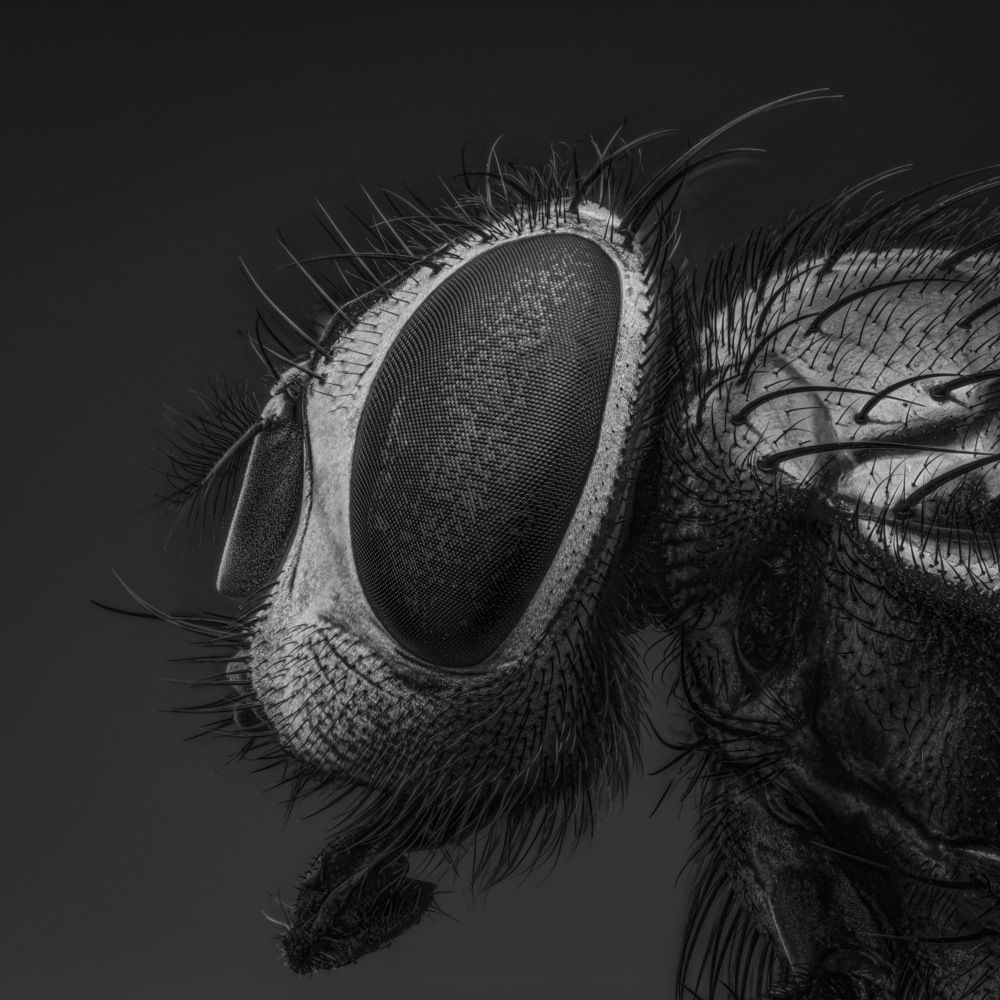
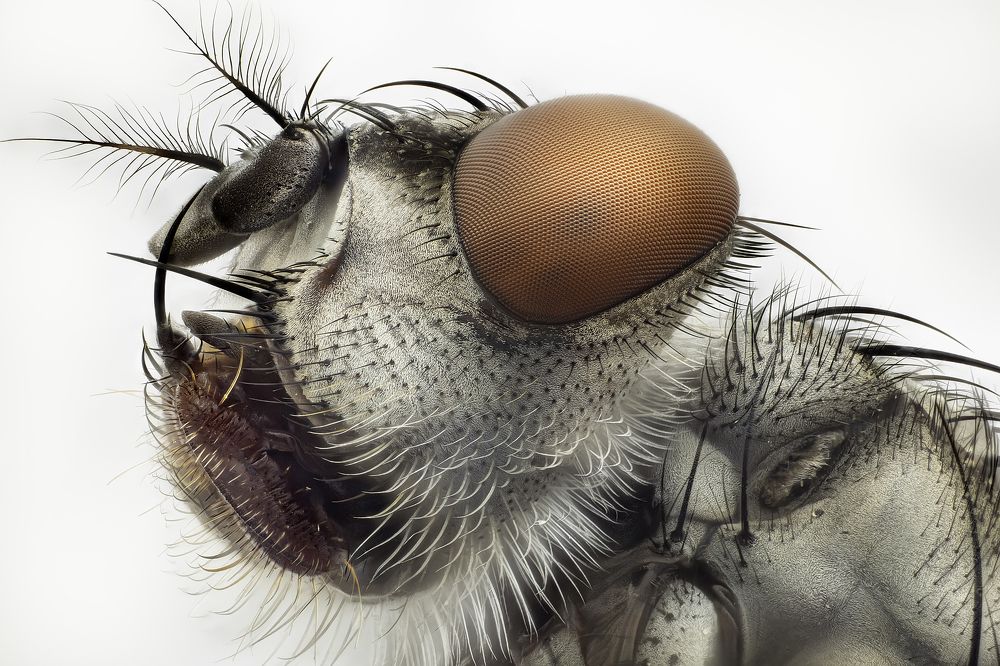
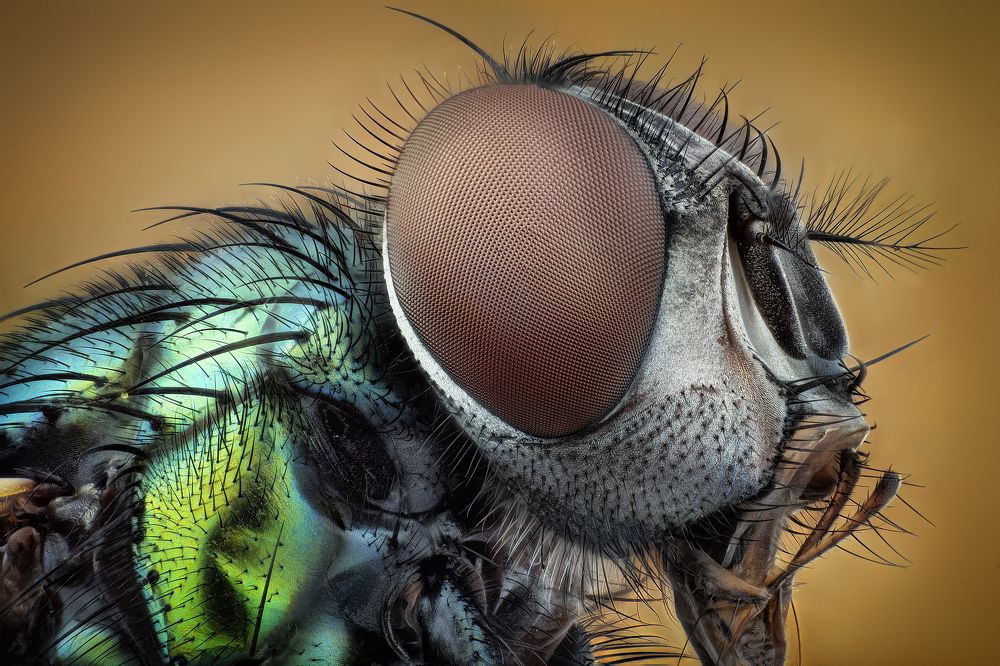
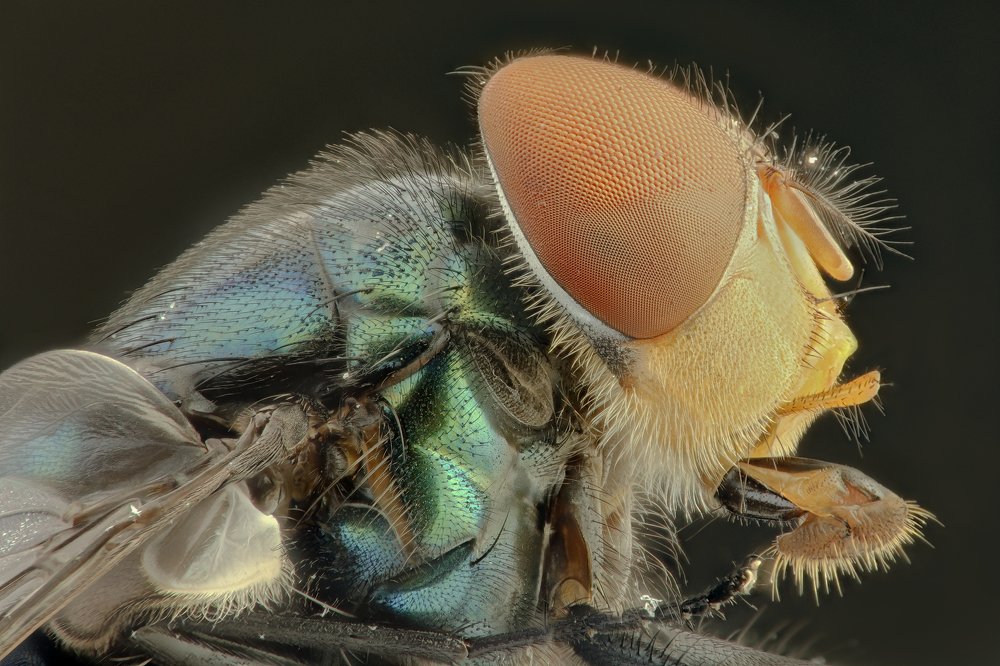
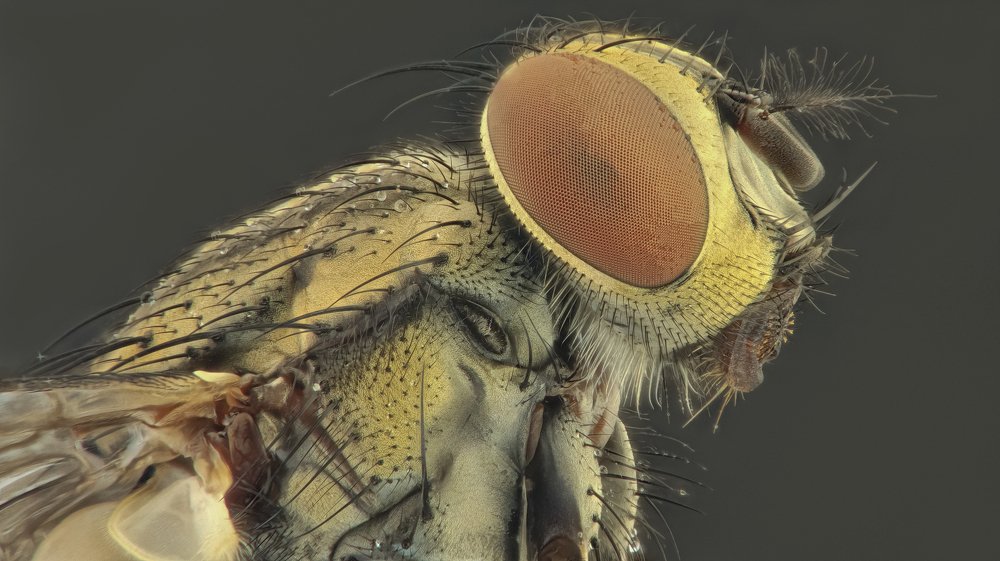
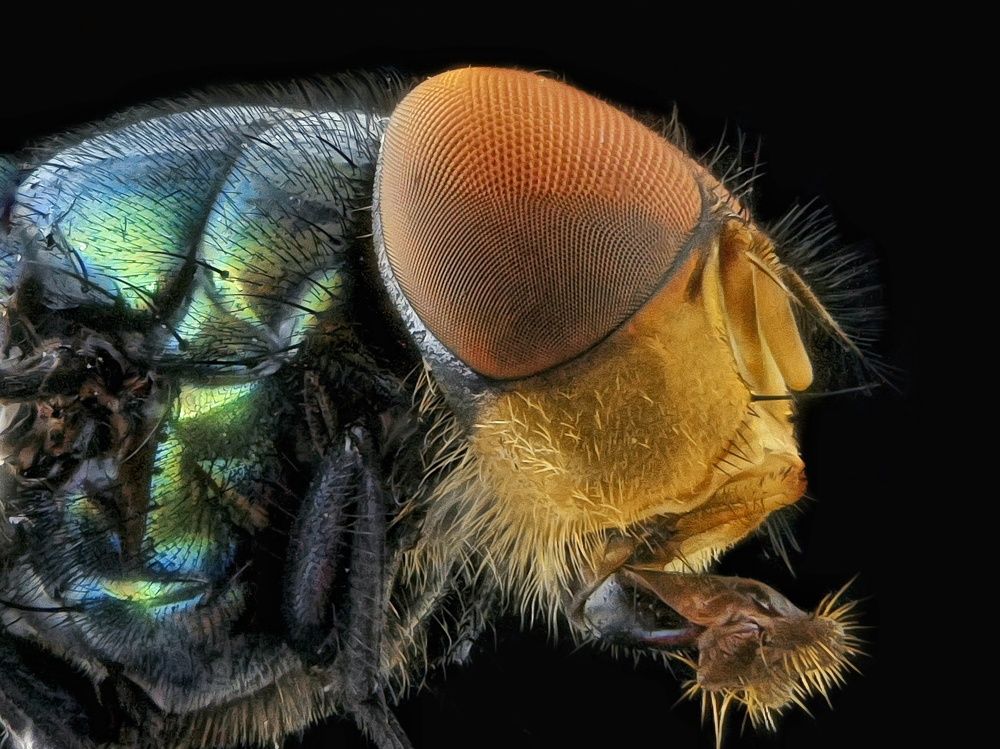
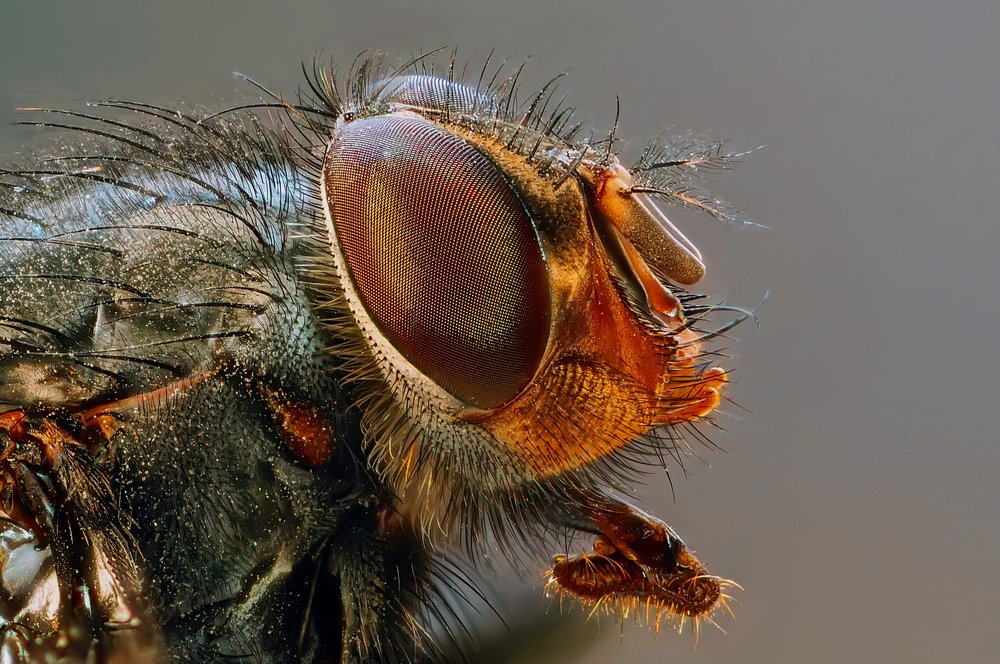
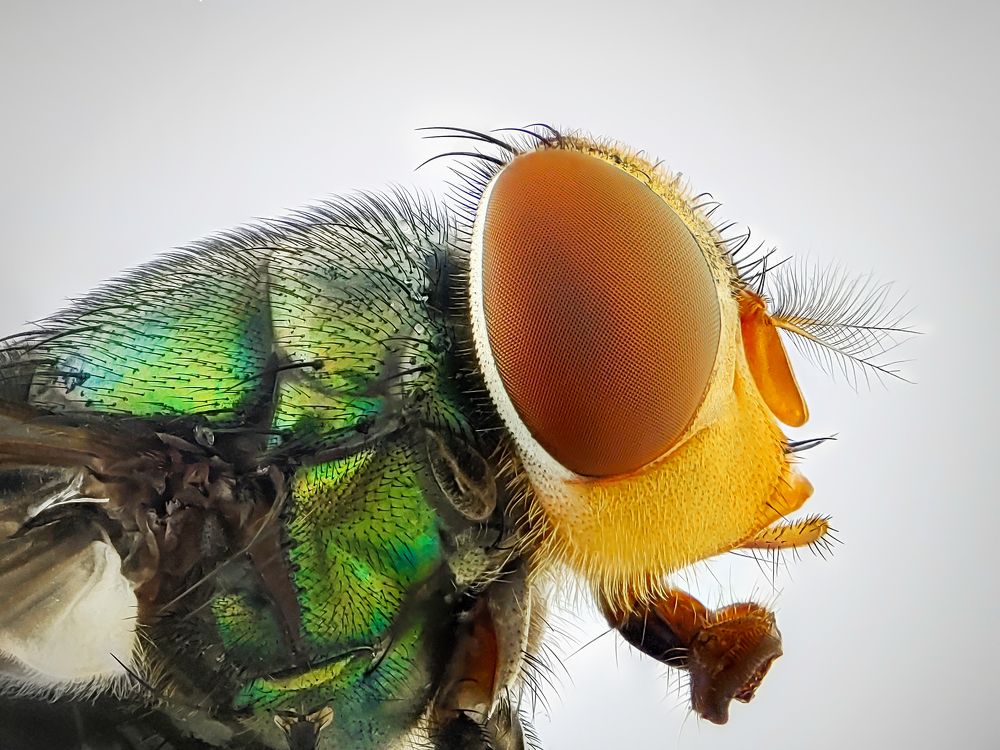
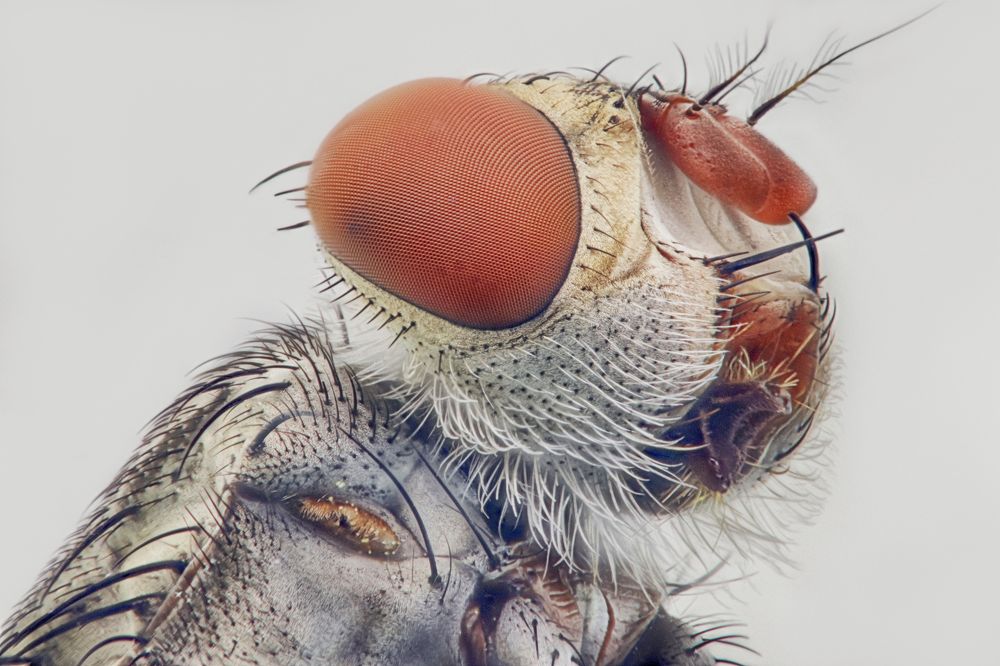
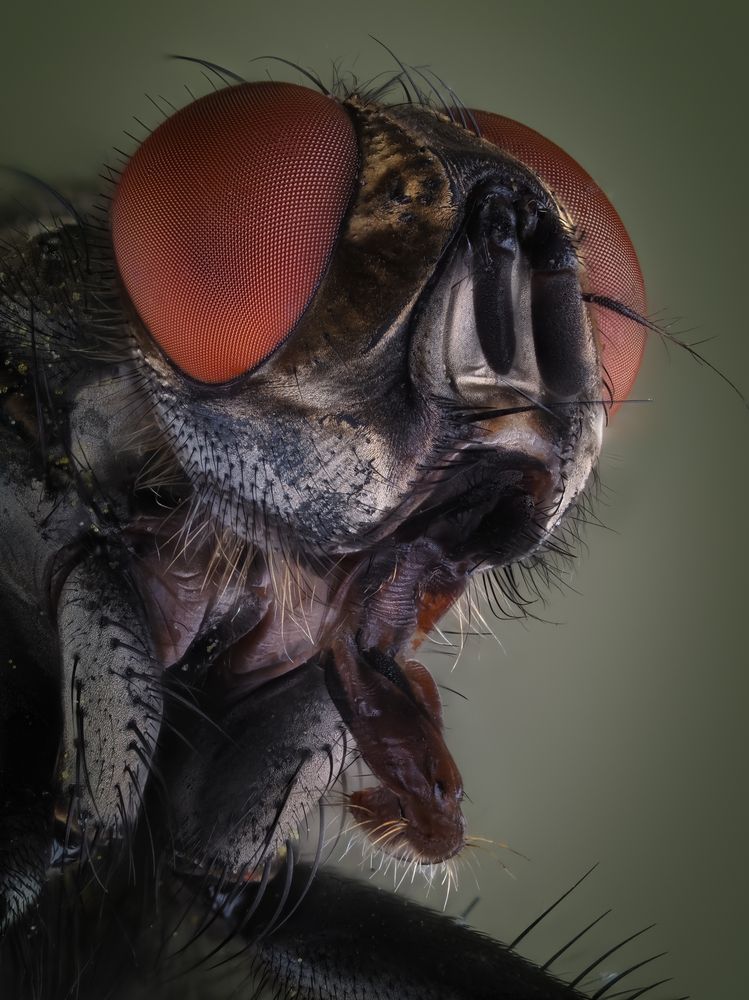
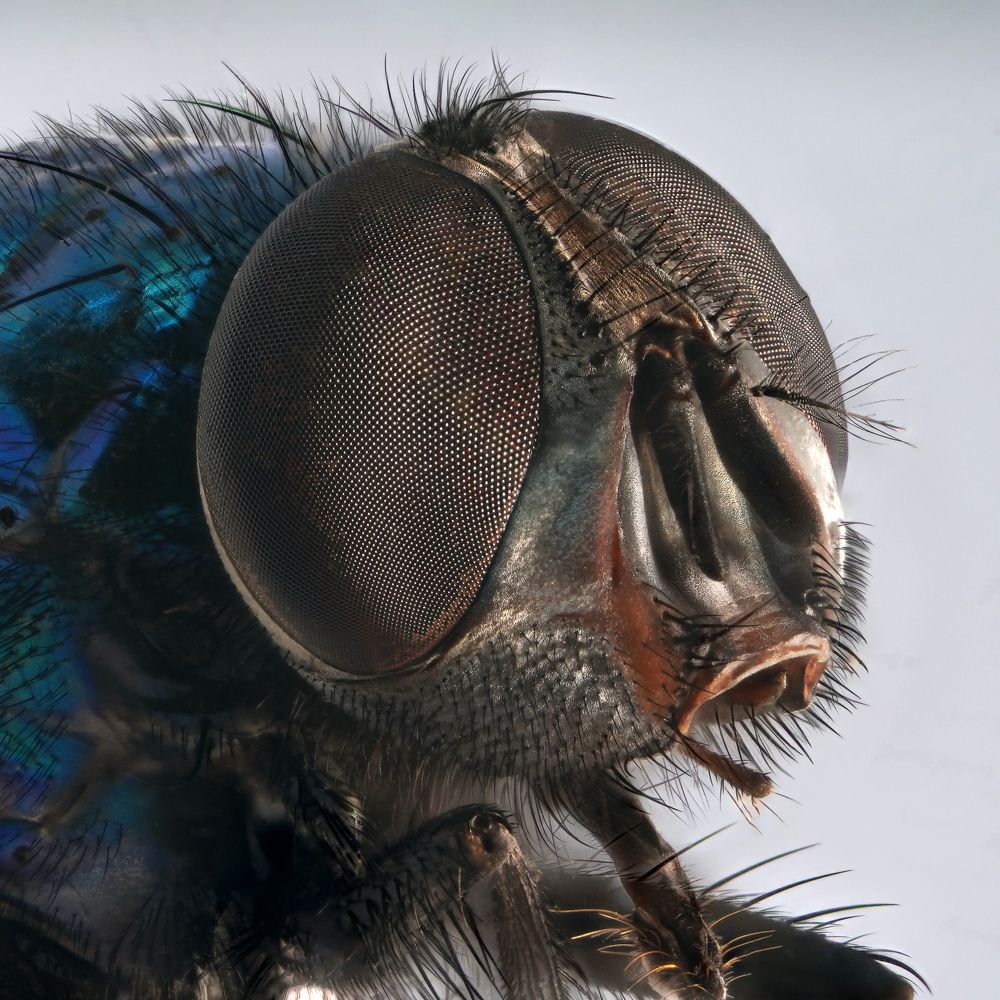
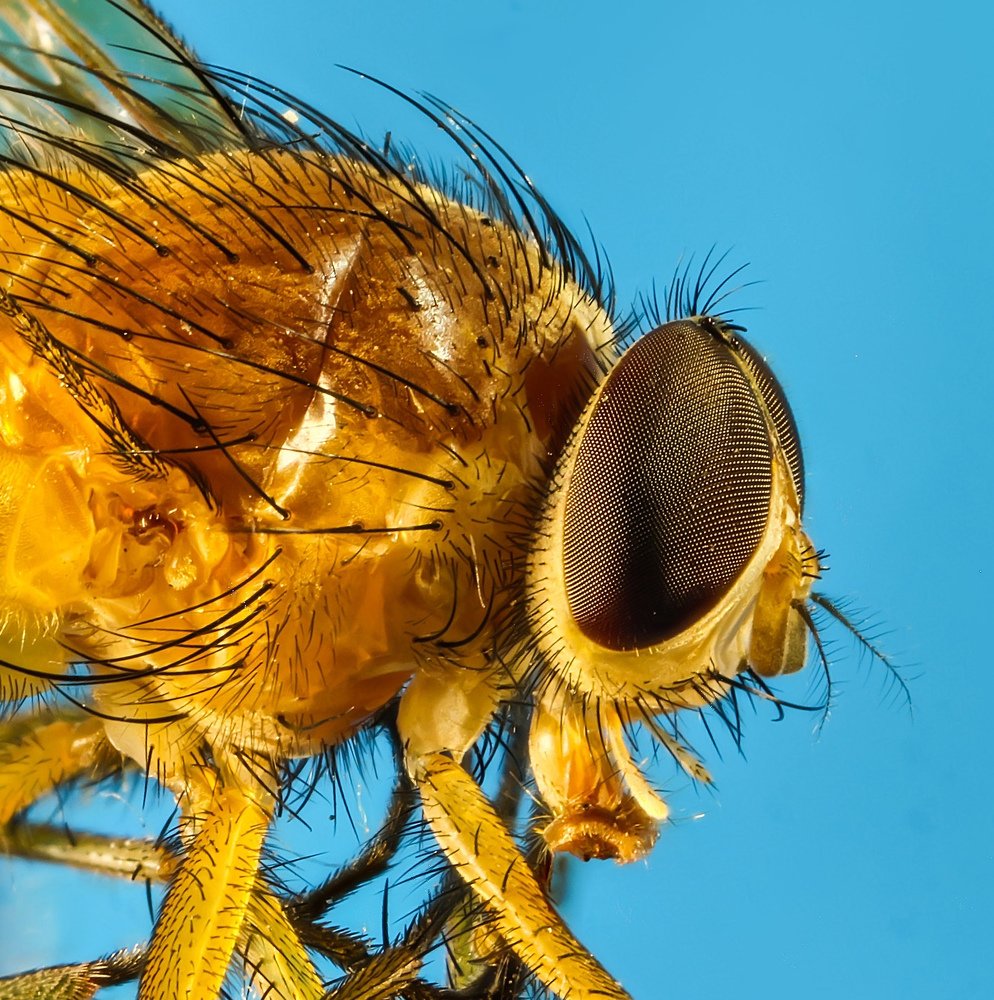
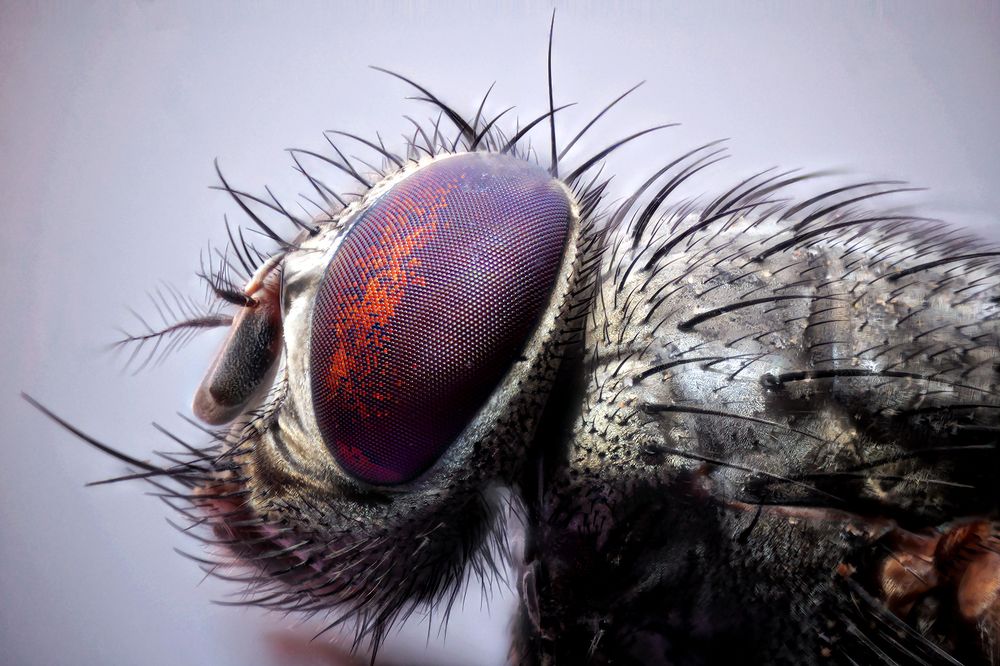
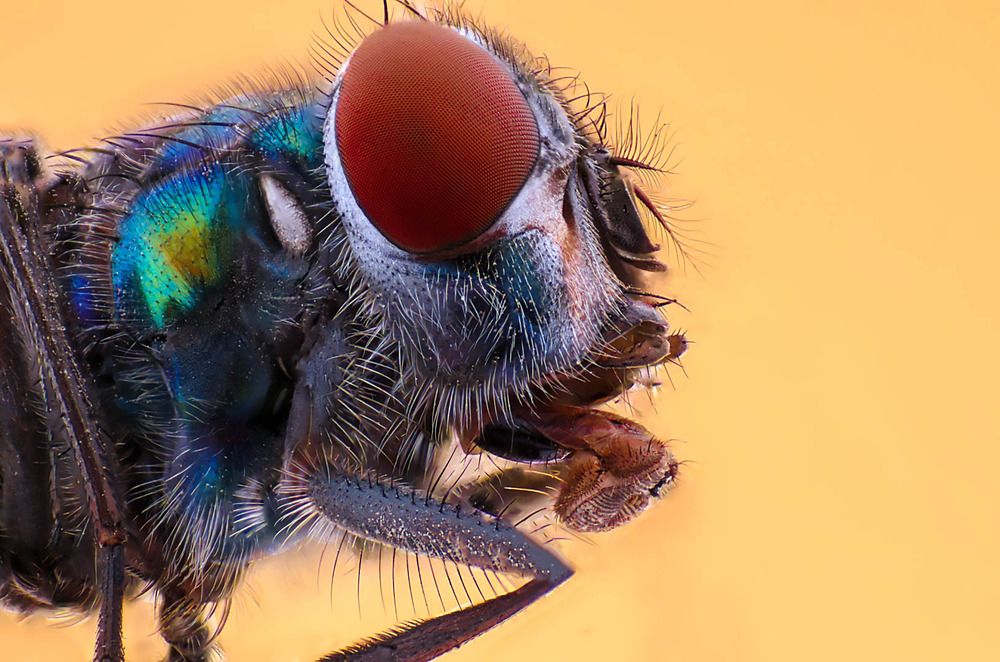
The images present extreme close-up views of the head and compound eye of a fly. Photographers utilize macro lenses to reveal the intricate textures of the insect's exoskeleton and the geometric patterns of its eyes. The subjects are captured from various profile angles against contrasting backgrounds, ranging from dark voids to bright monochromatic fields. This technique isolates the biological details of common pests like the housefly or blowfly, transforming them into complex visual subjects.
The group unites around the specific motif of insect macro photography, focusing on the structural complexity found in small creatures.
How to shoot it
🏠 Studio or location
Shooting takes place in a studio against a solid background (black, orange, green, or red) to create contrast and highlight details. The subject is fixed on a stand or holder to prevent movement during long-exposure focus stacking.
💡 Light
Studio directional lighting (softbox or flash) is used for even illumination and texture emphasis. Lighting setup is adjusted according to the background color to accentuate faceted eyes and bristles.
🧑🎤 Who you need
Only one macro photographer is needed. No assistant is required as the subject is small, immobile (or fixed), and focus stacking is automated via software.
🎭 Props and costume
Solid backgrounds (black, orange, green, or red) are needed for contrast. A reliable holder or stand is also required to secure the fly and prevent movement during long-exposure stacking.
⏱️ Preparation
Preparation involves catching and fixing the insect on a stand. Shooting takes considerable time: up to 135 frames with focus steps may be needed per shot, taking several minutes for exposure and subsequent stacking processing.
🎒 Gear
Macro lenses (e.g., Canon EF 100mm F/2.8 Macro) are used in combination with extenders like Raynox MSN-202 or microscopic objectives (Mitutoyo M Plan APO 10x).
Cameras and lenses the authors used (5)
🧰 Special equipment
For high magnification (up to 10x), microscopic objectives such as Mitutoyo M Plan APO 10x are used. Focus stacking method requires precise camera or subject fixation.
⚙️ Settings
Shutter 1/60 (1/160 – 1 s)ISO 100 (80 – 200)
Based on 1 frames with camera data. Median and 10-90% range across the idea frames.
Key parameter is aperture (F/13) to ensure depth of field in stacking. Shutter speed varies from 1/60 to 1.6 s, ISO typically 100–200.
⚠️ Good to know
Shooting is possible year-round but most common in autumn (October) and spring (May). Ethics are important: flies can carry diseases, so hand hygiene is recommended after work.
📈 How the idea developed
works uploadedshare of all site uploads, per 100k
The date is when the file was uploaded to the site. The chart counts works assigned to the idea.
✅ How to repeat it
- Use focus stacking to achieve sharpness from antennae to the back of the head.
- Choose a background color contrasting with the fly's coloring (e.g., black background for dark species).
- Secure the subject firmly, as long exposures do not tolerate movement.
✨ Interesting facts
- 🏆 How the best frame was shot: OM System OM-1MarkII, OM 90mm F3.5 + MC-20, 1/60, f/11, ISO 200, 180 mm
- 🔇 100% of frames were shot at ISO 400 or lower: almost no noise, any modern camera will do
- 📐 83% of frames are landscape orientation
- 🥇 2 works reached the finals, 1 won. Best contest: Micro world 2021
- 👤 Most frequent authors: Rui Santos 4Юрий Юрьевич Подгрушный 3Tsvetan Ganev 2Javier Ruperez 2Сергей Прокофьев 2
- 🌍 Authors by country: 🇷🇺 RU 8🇧🇷 BR 4🇧🇬 BG 2🇮🇷 IR 2🇪🇸 ES 2
Some tips are prepared by AI from the idea description, photos and their EXIF. Check the rules and access to places before you travel.
Works

These lists are generated automatically and may contain inaccuracies. Photos are shown in random order, and selections are refreshed twice a day. This section is made for exploring photos and does not claim 100% accuracy. The lists include photos that previously participated in contests that are already completed.